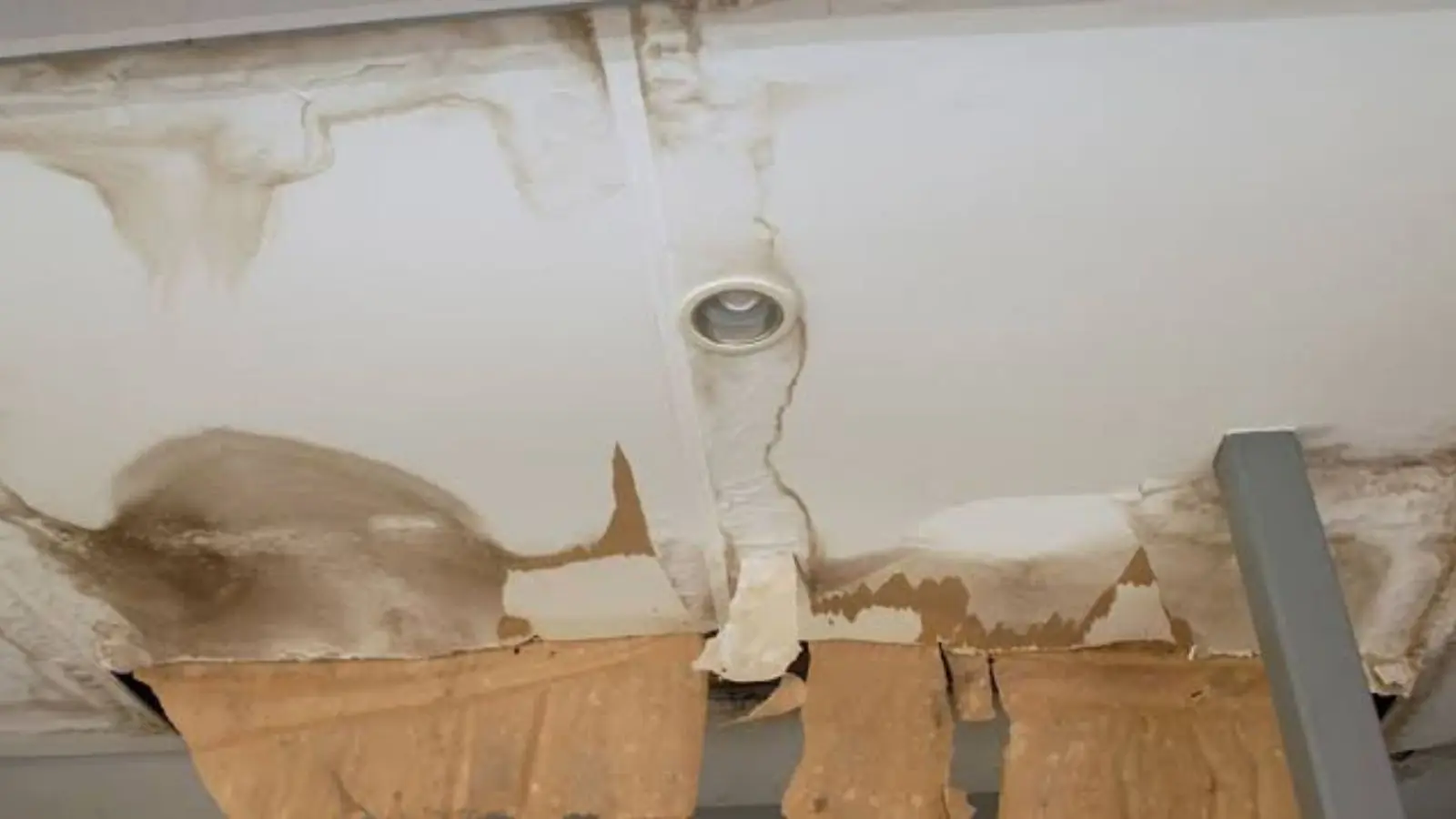
If water is leaking from your air conditioner, switch the system off at the thermostat, then turn off its breaker. A running unit keeps making condensate, and a blocked drain sends all of it into the pan, the insulation and the ceiling below. After the unit is off, call so the wet materials can be dried before mold has time to start.
Do these first
Turn the thermostat to off and flip the breaker for the air handler. If the ceiling below is bulging, keep everyone out from under it and do not poke it.
If water is near light fixtures, turn off power to that room. Place a bucket under steady drips and move furniture away from the stain. Photograph everything before you clean up.
Where AC water comes from
Cooling air removes moisture from the air. That water, called condensate, drips off the evaporator coil into a drain pan and runs out through a drain line. A lot of it moves through that system on a hot day, which is why small blockages turn into real leaks.
Clogged condensate line
Algae, slime and dust plug the drain. Water backs up, overfills the pan and spills into the attic or closet.
Rusted or cracked drain pan
Older metal pans corrode through. The pan may look dry on top yet leak from a pinhole into the ceiling below.
Disconnected or sagging drain
A line that has pulled loose or lost its slope cannot carry water away, and it drips where it should not.
Frozen evaporator coil
Low airflow or low refrigerant can ice the coil. When the ice melts, more water arrives than the pan can hold.
Failed float switch
Some systems shut off when the pan fills. If the switch sticks, nothing stops the unit from overflowing.
Why Hurst summers make this so common
The National Weather Service Fort Worth reports that July and August highs in North Texas usually reach the 90s and often 100 or more. Air conditioners run for hours at a time, so condensate production stays high. Clogs that held off in spring finally cause trouble in July.
Attic air handlers add risk because the pan sits directly above a ceiling. A slow overflow can soak insulation and drywall for days, and the first sign is often a brown stain that grows after the unit cycles.
Water still spreading?
Our 24/7 line is answered at any hour. Call (817) 623-9267 and describe what you see.
What happens to a wet attic
| Material | What water does | Likely handling |
|---|---|---|
| Fiberglass insulation | Mats down, holds water against the ceiling | Remove and replace if soaked, dry if lightly damp |
| Ceiling drywall | Stains, softens, then sags | Dry in place if firm, cut out if soft |
| Framing and decking | Absorbs moisture, may stain | Dry with air movement, then recheck readings |
| Ductwork and wrap | Can trap moisture and drip | Inspect and dry, replace damaged wrap |
| Air handler platform | Rusts and can leave runoff stains | Clean, dry and have the unit serviced |
Wet insulation is the part that surprises people. It looks harmless but keeps releasing moisture into the ceiling board and the framing, so removing it early helps the rest dry.
Drying steps for an AC leak
- Stop the unit and the waterSwitch the system off. Clear the drain line or have an HVAC technician do it, and empty any standing water from the pan.
- Find how far water traveledA moisture meter and thermal camera trace the wet area through the ceiling and attic.
- Remove wet insulationPull out insulation that is soaked or matted. Dry ones can sometimes stay.
- Dry the structureAir movement and dehumidification dry the board and framing until readings match a dry reference. Work follows ANSI/IICRC S500.
- Rebuild and finishReplace insulation, patch or replace ceiling board, then texture and paint.
The drying stage is a water mitigation job, and the rebuild afterward is water damage repair. Scope and price are explained before work starts.
Lowering the odds of a repeat
- Ask your HVAC technician to flush the condensate line before summer starts.
- Make sure the drain pan has a working float switch or a secondary pan.
- Look at the ceiling under any attic unit each month in hot weather.
- Keep the air filter changed so the coil does not freeze.
- Know where the breaker for the air handler is, so you can cut power quickly.
None of these steps costs much compared with a ceiling rebuild. They also give you an early warning, since a damp pan or a faint stain shows up before the board sags.
Mold risk after a wet attic
Mold needs moisture, and an attic that stays warm and damp gives it plenty. Texas Department of Insurance guidance says mold can start within about a day in a wet area, and that quick drying is the best defense.
Do not guess at dark spots on the underside of decking. Testing and cleanup follow ANSI/IICRC S520, and larger areas call for a licensed professional. Ask to see the license and verify it on the TDLR license search. Health questions belong to a physician.
No restoration company can promise mold will never return, because that depends on whether the leak is fixed and the attic stays dry. See our mold remediation page for how the process works if growth is found.
What restoration cannot do
A restoration crew dries and rebuilds. It does not repair the air conditioner. The HVAC technician fixes the drain line, pan or switch, and a restoration job should not be finished until that is done.
Insurance may treat a sudden overflow differently from one that dripped for months. Check your policy and ask your insurer, and report hidden damage promptly. We serve Bedford and North Richland Hills homes with the same approach.
Frequently Asked Questions
Water around the indoor unit, a full drain pan, a musty smell near the air handler, or the system shutting off on its own are common signs.
A stain on the ceiling below an attic unit often shows up before any of those.
It is better not to. Running it adds condensate to a system that cannot drain, so the damage grows.
Switch it off and let a technician fix the drain, then dry the ceiling.
Not always. Lightly damp insulation can sometimes dry in place, while soaked or matted insulation usually comes out.
Readings decide, and a crew should show you the numbers.
Texas Department of Insurance guidance says sudden and accidental water damage is often covered, while gradual leaks often are not. A clog that slowly drips for months may be treated differently from a sudden overflow.
Check your policy, photograph the damage, and tell your insurer as soon as you see it.
Many HVAC technicians flush the line during seasonal service. Ask your technician how often is right for your system.
A clear drain before summer heat is cheaper than a ceiling repair.
Hurst Notes for AC Leak Season
Summer in Hurst is when air handlers earn their keep. The National Weather Service Fort Worth notes the hottest stretch comes in July and August, so that is when a marginal drain line finally fails. Book an HVAC drain check ahead of that stretch and keep an eye on the ceiling below the attic unit.
Spring and fall are typically the wettest periods from thunderstorms, but an AC leak is not flood damage. Texas Department of Insurance guidance separates sudden, accidental events from floods, which standard homeowner policies exclude. Ask your insurer which category applies to your situation.
If an AC replacement or major attic rebuild follows the leak, ask the City of Hurst building department whether a permit applies. A quick call before work starts keeps the schedule on track.
Sources: National Weather Service Fort Worth, Texas Department of Insurance, City of Hurst building department.