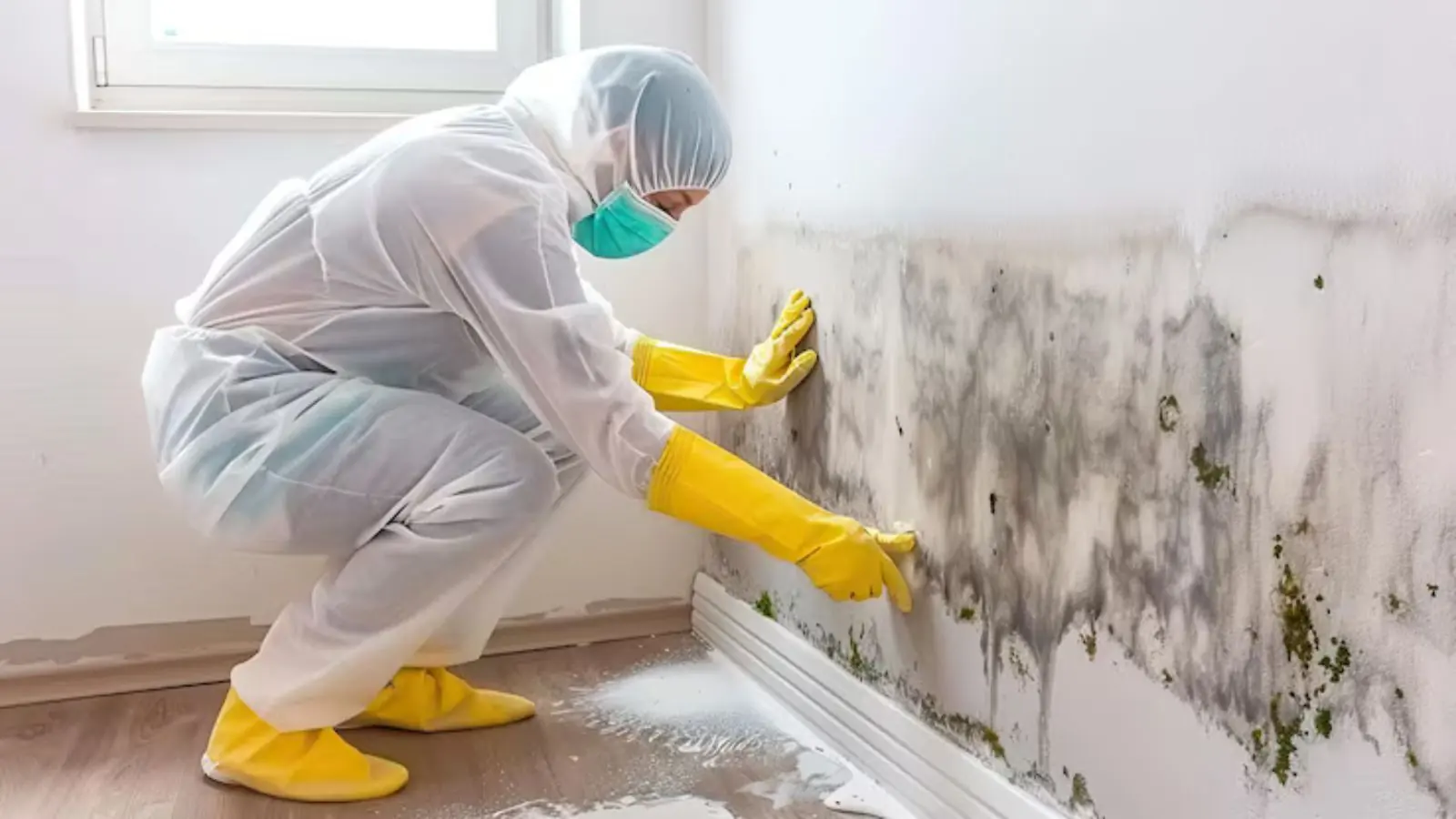
Mold grows where materials stay damp, and it shows up in places that stay damp long enough: behind a wall, under carpet, around an air conditioner drain. Hurst Water Damage Pros handles the containment, air filtration and removal side of mold work. The method follows ANSI/IICRC S520, the published standard for mold remediation, and starts with finding and fixing the moisture.
A Musty Smell, Dark Spots or Damp Carpet in Your Hurst Home
A musty smell in a closet, dark spots in the corner of a bathroom ceiling, or carpet that feels damp underfoot all say the same thing: moisture has been sitting somewhere it should not. Color and smell alone cannot tell you what is growing or how far it has spread. Finding out is what mold remediation is for, and it begins with looking for the water.
Mold Testing and Inspection
Independent testing means the person who tests is not the person who cleans. That separation matters because the tester has no reason to find more or less mold than is really there. Under Texas law, people who inspect and test for mold hold a mold assessment license from the Texas Department of Licensing and Regulation (TDLR), and people who clean and remove it hold a separate remediation license.
Start with the moisture. If the source is still active, a leaking roof, a clogged condensate line or a weeping pipe, any cleanup will be followed by regrowth. A licensed assessor finds the extent of the problem with moisture meters, thermal imaging cameras and sampling, then writes a protocol that lists what to remove, how to contain it and what the cleanup must achieve.
For a larger job, a remediator follows that written protocol rather than inventing its own. We recommend independent testing whenever you want proof, whenever a lender or buyer is involved, or when the scope is unclear. Ask to see any license and check it on the TDLR license search.
Mold After Water Damage
The window that matters most is the first day or two. Texas Department of Insurance guidance says mold can start within about a day of a wetting, which is why professionals aim to dry a structure inside the first 24 to 48 hours. Wet drywall, padding and insulation hold water, and each hour adds risk.
If you caught the water early, quick drying through water mitigation can keep a leak from becoming a mold job. If it sat for days, or was behind a finished wall where no one looked, mold work may be needed alongside the drying. Crews use moisture meters and thermal imaging cameras to find the wet pockets before opening walls.
Common starting points in Hurst are an upstairs toilet leak, a bathroom sink supply line, an air conditioner condensate line in summer, and a roof or siding leak after a storm. Dry first, then judge what mold is left.
Water still spreading?
Our 24/7 line is answered at any hour. Call (817) 623-9267 and describe what you see.
Mold Removal and Black Mold Cleanup
Dark mold is often called black mold, but color does not identify a type, and we make no health claims about any of it. What matters for cleanup is where it is growing, on what material and how far it has spread. The work is the same whatever the color.
- Contain the areaPlastic barriers and negative air keep spores from moving into the rest of the house.
- Filter the airHEPA air scrubbers run during the work and afterward to capture airborne particles.
- Remove porous materialsDrywall, insulation, carpet and padding with growth are cut out, bagged and taken away. Cleaning cannot save them.
- Clean what staysWood framing and other solid surfaces are HEPA-vacuumed and cleaned of growth.
- Dry and verifyAir movers and LGR dehumidifiers dry the structure until moisture readings are normal.
No honest company can promise mold will never return. Mold needs moisture, so the lasting protection is fixing the water source and keeping the area dry. After the cleanup, the water damage repair team rebuilds what was removed.
Mold Clearance for a Home Sale or Loan
Sometimes a lender asks for mold to be removed and cleared before it will fund a purchase. This often surfaces during an inspection, and the sale stalls. The usual path is independent testing to document the problem, remediation to a written protocol, then independent clearance testing afterward.
Clearance testing is a second round of inspection by a licensed assessor who confirms the cleanup met the protocol. The report is the paperwork you hand to the buyer, lender or insurer. We cannot promise any lender will accept it, because each one sets its own rules, so ask yours what documents it needs before work begins.
Tell us the closing date when you call. Scope and timing are explained before work starts, and we will say plainly what can be done on that schedule and what cannot.
Which Situation Needs What
| Situation | Typical next step |
|---|---|
| Small visible patch, under 25 contiguous square feet | Texas rules generally let unlicensed people clean it. Fix the moisture first. |
| Musty smell, nothing visible | Look for the water source and consider independent testing. |
| Growth behind or inside a wall after a leak | Independent assessment, written protocol, containment and removal. |
| Lender or buyer requires clearance | Testing, remediation to protocol, then clearance testing and report. |
| Mold after storm or creek flooding | See flood damage restoration for the water, then assessment for the mold. |
What Affects the Cost of Mold Remediation
- Containment size: a closet corner and a whole attic need very different barriers and air filtration.
- Materials involved: porous items such as drywall and carpet are removed, while framing is cleaned.
- Testing: independent assessment is a separate cost from the remediation itself.
- Drying: days of equipment and moisture checks add up when the structure is still damp.
- Clearance: post-work testing and the report are priced separately from the cleanup.
Scope and price are explained before work starts. Call with a description of what you found, and ask for a real number.
Texas Rules and Insurance Notes
TDLR licenses both mold assessment and mold remediation. Visible mold under 25 contiguous square feet may generally be cleaned by unlicensed people. Owners or managers of buildings with fewer than 10 dwelling units do not have to be licensed for mold work on their own property. Larger jobs use a licensed assessor's protocol and a licensed remediator. We do not claim a mold license here, so verify anyone's license on the TDLR search.
Check your policy and ask your insurer. Texas Department of Insurance guidance says that if mold develops on a covered damaged item, it would be covered, but mold from a flood is not. Most policies do not include mold cleanup and testing after a damaged item is removed, though some insurers let you add it. Report damage promptly and keep a certificate of removal if you file a claim.
Health questions about mold belong with a physician, not a contractor.
What to Do Before a Crew Arrives
Mold and wet materials call for a few careful steps. Most of them are about not making the problem bigger.
- Do not disturb visible growth. Scrubbing or sanding can spread spores through the house.
- Turn off the HVAC system if growth or a musty smell is near a vent or return.
- Stop the moisture source first, such as a leak, a clogged condensate line, or a wet crawl space.
- Do not mix bleach with ammonia or other cleaners, since the fumes are dangerous.
- Photograph the area and note dates so the damage is documented.
- If anyone has breathing trouble, call a physician. For fire, gas, or electrical danger, call 911.
Mold Work in Hurst and Nearby
Hurst summers run hot, with highs usually in the 90s and often past 100, according to the National Weather Service in Fort Worth. Air conditioners work hard, so condensate lines and drain pans become real leak sources. Check the line and the pan each spring so a slow drip does not wet a ceiling or closet wall for weeks.
The Census reports a median owner-occupied home value of $315,200 in Hurst, and a mold finding can hold up a sale. Keep the testing report and any clearance paperwork with your home records. Euless neighbors can see our service in Euless as well.
Frequently Asked Questions
Those signs usually mean moisture has been present, from a leak in the wall, a roof or an air conditioner drain, or from humidity with no airflow. Color alone cannot tell you what is growing.
Find and fix the moisture first, then consider independent testing to learn how far it goes.
Independent testing is a good idea when the extent is unclear or a lender or buyer is involved. The tester should be separate from the remediator.
A licensed assessor writes the protocol, and the remediator follows it.
Texas rules generally allow unlicensed people to clean visible mold under 25 contiguous square feet. Fix the moisture or the patch will return.
If it keeps coming back or you find more behind the wall, call.
No honest company can promise that. Mold needs moisture, so the lasting protection is fixing the source and keeping the area dry.
Clearance testing confirms the cleanup met its protocol on the day it was tested.
Ask the lender what documents it needs, then arrange independent testing, remediation to a written protocol and independent clearance testing. We cannot promise any lender will accept the report.
Mention your closing date when you call so scope and timing can be discussed up front.
Texas Department of Insurance guidance says mold on a covered damaged item can be covered, and mold from a flood is not. Mold cleanup and testing are often not included.
Check your policy and ask your insurer before work begins.