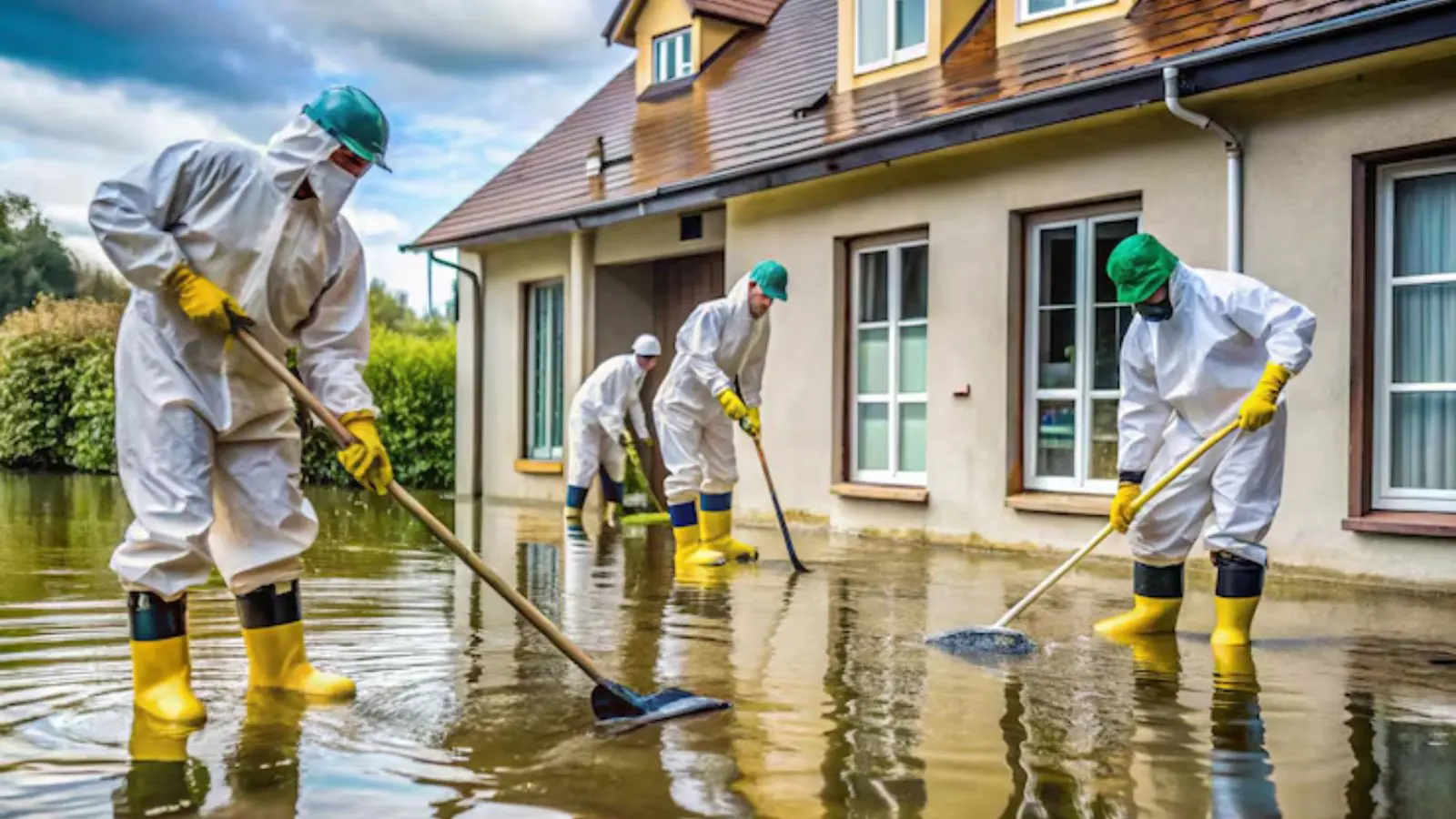
Wet belongings and soaked flooring get worse by the hour, so call (817) 623-9267 any time because the line is answered 24/7. Until the crew comes, stop the water source and close the main water valve. Turn off power to wet areas only if you can reach the panel dry, lift valuables and papers off the floor, and keep people and pets out of any water that might be contaminated.
What is in the water decides what happens to your things
Cleanup starts with one question: where did the water come from? The answer sets the water category, and the category sets how much has to be thrown out. A clean supply line and a sewer backup might leave the same puddle, but they are very different jobs.
| Category | Typical source | What it means | What is done |
|---|---|---|---|
| Category 1 | Broken supply line, overflowing sink with clean water | Clean at the start, but it can degrade as it sits | Extract, dry, save most materials, light cleaning |
| Category 2 | Washer or dishwasher discharge, toilet overflow with no solids | Contains contaminants that can cause illness if left | Extract, clean and disinfect, remove porous materials such as carpet pad |
| Category 3 | Sewage, rising water from outside, long-standing water | Heavily contaminated | Remove porous materials, sanitize hard surfaces, strict protective steps |
When standing water and soaked rooms cannot wait
Call right away if sewage or dirty water is involved, if wet carpet is already smelling, or if the wet area is larger than a single room. Same-day dispatch is available when crews are free, and after-hours calls are answered the same as daytime calls.
Mold needs moisture, and TDI notes it can start within about a day. A quick call keeps a cleanup job from turning into a mold remediation job later.
Electrical and sewage safety
If water has reached an electrical panel, outlets or sewage is coming up from a drain, stay out of that area. Cut power only if you can do it without standing in water.
Call 911 or the utility for electrical or gas danger before calling the restoration line.
How a cleanup job moves
- Walk the home and testCrews check the water category, what the water touched and how far it spread, using moisture meters and thermal imaging cameras.
- Remove water and debrisExtraction units pull remaining water, and ruined carpet pad, insulation and drywall are bagged and carried out.
- Sort belongingsItems are separated into keep, clean and discard, with photos taken for your records.
- Sanitize and cleanHard surfaces and framing that stay are cleaned with products matched to the water category.
- Deodorize and dryOdors are treated at the source, and air movers and dehumidifiers finish pulling moisture out.
Water still spreading?
Our 24/7 line is answered at any hour. Call (817) 623-9267 and describe what you see.
What gets thrown out and what can be saved
Porous materials soak up water and whatever was in it. Hard, sealed surfaces can usually be cleaned and kept. The category of water and how long the material stayed wet decide the call.
Usually saved
Solid wood furniture, glass, metal, plastic, sealed tile and concrete, if the water was Category 1 or 2 and they are cleaned promptly.
Often discarded
Carpet pad, insulation, particleboard and drywall after contaminated water, plus mattresses and upholstery from Category 3.
Case by case
Hardwood, rugs, books and photos. Quick drying can save some, while sewage ends the discussion.
Keep for your adjuster
Photograph damaged items first, and keep them until the adjuster has seen them if you plan to file a claim.
Sanitizing and deodorizing
A musty or sour smell means moisture or bacteria is still in the building. Perfume sprays only hide it. Cleanup finds the source of the odor, removes the material that holds it and treats the surface that remains.
For contaminated water, hard surfaces get cleaned and then sanitized in that order. Crews wear protective gear and keep the work area separate from the rest of the house. Work follows ANSI/IICRC S500, the published standard for water damage restoration, and homeowners can ask any company whether its crews follow it.
How cleanup fits with the rest of the job
Cleanup and drying overlap. The same visit that clears debris usually sets the water mitigation equipment that dries framing and subfloor. When pooled water is still deep at the start, emergency water removal comes first. After the structure is dry, water damage repair handles new drywall, flooring and paint.
Flooding from storms or creeks is a different case with its own rules, covered under flood damage restoration.
What drives the price of a cleanup
No two cleanups cost the same, and these five things explain why:
- Water category, because Category 3 needs more removal and protective steps.
- Affected square footage, which sets labor and the amount of debris.
- Materials involved, since carpet, laminate, hardwood and drywall are handled differently.
- Drying days and equipment needed before the home is clean and dry.
- Rebuild scope, meaning how much of the house has to be replaced afterward.
The scope and price are explained before work starts, and you can ask for a real number by calling.
Insurance questions after cleanup
Texas Department of Insurance guidance says most homeowners and renters policies cover sudden, accidental water damage but usually not gradual leaks or seepage. Standard home policies exclude flood damage. Check your policy and ask your insurer before you decide what to discard.
Tell your company as soon as you can, take photos or video before cleanup, and make temporary repairs only. Hold off on permanent repairs until the insurer has inspected.
Cleanup in Hurst
Hurst runs its own wastewater system, with about 155 miles of collection lines. If raw sewage is backing up through a floor drain, the City's Public Works Dispatch at 817-788-7212 can help with a main-line problem, and the answer line is staffed around the clock. Cleanup inside the home is a separate call.
Some callers have water that came in from the yard, and the City of Hurst floodplain page notes that localized street and yard flooding has not been mapped. Check the FEMA flood map for your address. In Bedford, a nearby town, the same work is described on the Bedford service page.
Frequently Asked Questions
Yes. The line at (817) 623-9267 is answered at any hour, including weekends and holidays.
Crews are dispatched same day when available, and the scope is explained on the call before work starts.
Category 1 is clean water from a source such as a supply line. Category 2 has contaminants, such as washer discharge. Category 3 is heavily contaminated, such as sewage or rising outside water.
Clean water can slide into a higher category if it sits for a day or two, so speed matters.
Keep everyone out of the area and do not touch the water. Stay away from electrical panels and outlets if water is near them.
Call the restoration line. Porous materials that touched sewage are normally removed, and hard surfaces are sanitized.
Sometimes. Carpet that got wet from clean water can often be dried in place if the pad is lifted and dried fast. Carpet after Category 2 or 3 water is usually discarded.
Moisture readings and the age of the water decide it.
It gets rid of the cause. Crews remove the wet materials that hold the odor, clean the surfaces and dry the structure.
If the smell stays after drying, there may be a hidden wet area that needs another look.
TDI says sudden and accidental damage is often covered and gradual leaks often are not. Floods are excluded from standard policies.
Ask your insurer, and photograph everything before it is thrown out.