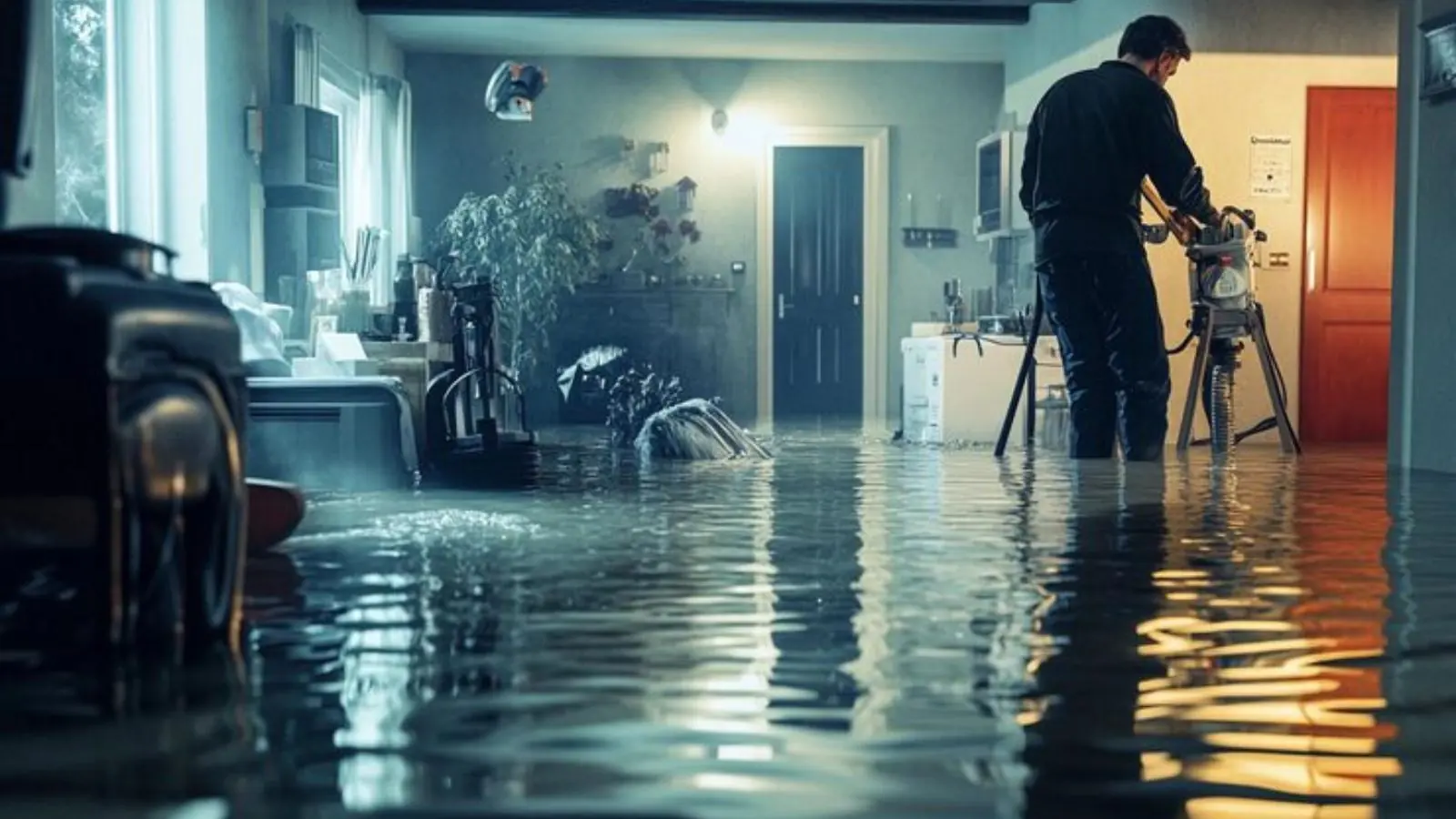
Water that keeps spreading is on a clock, so call (817) 623-9267 now, because the line is answered 24/7. While you wait, stop the source if you can and shut off the main water valve. Turn off power to wet areas only if you can reach the panel dry, lift valuables off wet floors, and keep people and pets out of contaminated water.
Wet carpet, damp walls, and a musty smell: what mitigation means
A squishy carpet, a stain creeping up a wall or a sour smell in a closed room all point to the same thing. Water got into materials that do not dry on their own. The trade term for stopping that damage early is water mitigation, and it is a different job from rebuilding.
When a leak or flood is an emergency
Some water problems can wait until morning. These cannot, because the water is still moving or already inside a wall, ceiling or floor.
- A supply line, water heater or washer hose is still running or you cannot find the shutoff.
- A ceiling is sagging, bulging or dripping from a leak above.
- Water has reached baseboards, cabinets or the lower part of a wall.
- Carpet or padding has been wet for more than a few hours.
- The water came from a drain, toilet or outside the house.
Crews are dispatched same day when available, including evenings and weekends. The call covers what is wet, how it happened and what the first visit will include.
Safety before you call
Where water touches electrical panels, outlets or appliances, or sewage is involved, stay out of the area. Cut power only if you can reach the panel without stepping in water.
For sparks, a burning smell, a gas odor or a downed line, call 911 or the utility first. Call the restoration line after the danger is handled.
The first 72 hours, step by step
- Find and stop the sourceCrews trace the leak, close the right valve and confirm the water has stopped, because drying cannot work while water is still arriving.
- Start extractionPooled water comes out with pumps and extraction units, and wet carpet and pad are lifted when they cannot be saved.
- Set up dryingAir movers and LGR dehumidifiers go in based on the wet area and the materials involved.
- Map the moistureMoisture meters and thermal imaging cameras show which walls, floors and ceilings are wet, including areas that look fine.
- Monitor and adjustReadings are repeated at visits, equipment is moved as needed, and the job ends when materials reach their dry targets.
Water still spreading?
Our 24/7 line is answered at any hour. Call (817) 623-9267 and describe what you see.
Structural Drying
Structural drying is the part of mitigation that removes water you cannot see. Drywall, baseboards, subfloor and framing hold moisture long after the surface feels dry. Crews set air movers to push dry air across wet surfaces and LGR dehumidifiers to pull moisture out of the air so the materials can release more.
Moisture meters give a number for each material, and thermal imaging cameras show cool, wet patches behind walls and under floors. Readings are logged on day one and again at each visit. Drying is done when wet materials return to a dry standard for that material, not when the room feels dry to the hand.
Equipment placement changes as the job moves. Air movers get repositioned, a baseboard or section of drywall may be opened to reach a wet cavity, and dehumidifier output is checked against room conditions. Hot, humid air indoors slows drying, so closed doors and a steady thermostat help. The published standard for this work is ANSI/IICRC S500, and homeowners can ask any company whether its crews follow it.
What each piece of equipment does
| Equipment | What it does | When it is used |
|---|---|---|
| Extraction unit | Pulls standing water and saturated carpet water out fast | First hours, before drying starts |
| Air mover | Moves air across wet floors, walls and cabinets | Throughout drying, repositioned as readings change |
| LGR dehumidifier | Removes moisture from the air so materials keep releasing water | Closed rooms during the full drying period |
| Moisture meter | Gives a reading for drywall, wood and subfloor | Day one mapping and every follow-up visit |
| Thermal imaging camera | Shows cool, wet areas behind surfaces | Scoping hidden water and checking spread |
Drying equipment is part of a monitored job, so this company does not offer rentals. Callers sometimes ask about renting air movers and dehumidifiers, and the honest answer is that placement and readings are what make them work.
Where mitigation ends and the next stage begins
Once the building is stable, the work moves on. Wet contents and contaminated materials fall under water damage cleanup, and rebuilding drywall, flooring and trim is covered by water damage repair. If moisture sat long enough for mold to show, mold remediation is a separate scope with its own standard.
Mitigation is not waterproofing. It deals with water already inside the house and does not stop future seepage through a foundation.
What changes the cost of mitigation
- Water category, since contaminated water needs more removal and protective steps.
- Affected square footage, which sets how much equipment the job needs.
- Materials involved, because carpet, hardwood, drywall and concrete dry differently.
- Drying days and equipment, which depend on how deep the water went.
- Rebuild scope, meaning how much has to be opened up or replaced.
The scope and price are explained before work starts, and you can ask for a real number by calling.
Insurance and your records
Texas Department of Insurance guidance says sudden and accidental water damage, such as a burst pipe or broken washer hose, is often covered, while gradual leaks and neglect often are not. Flood damage is excluded from standard home policies and needs separate flood coverage. Check your policy and ask your insurer what applies to you.
Photograph the damage before anything is moved, keep damaged items until the adjuster has seen them, and keep receipts for temporary repairs. Report hidden damage promptly, since TDI says it generally must be reported within days of when you first see it.
Mitigation notes for Hurst homes
The City of Hurst runs its own water system. If water is gushing near the street, a meter or a main line, call the City's Public Works Dispatch at 817-788-7212, which is staffed around the clock. Inside the house, your shutoff valve is the first stop.
North Texas summers push air conditioners hard, and condensate lines, drain pans and attic units are real leak sources. A slow drip above a ceiling can wet insulation and drywall for days before a stain shows. Spring and fall bring the wettest weather, so storm water entering through a door or window is a common reason for calls.
Homes near busy corridors such as Precinct Line Road and Northeast Loop 820 are served the same as any other address. Neighbors just across the line in Bedford can find the same help through our Bedford service page. If the water came from a river or street flood, see flood damage restoration for how that differs.
Frequently Asked Questions
Yes. The line at (817) 623-9267 is answered at any hour, including nights, weekends and holidays.
Crews are dispatched same day when available, and the scope is explained on the phone before anyone starts work.
It is mitigation if water got into the carpet pad, subfloor or walls. A surface cleaning will not remove moisture trapped under the carpet, and the musty smell usually means the materials are still wet.
A moisture meter reading tells you what is actually going on.
Most jobs run several days, but the length depends on the water category, the materials and how far the water spread. Air movers, LGR dehumidifiers and moisture meters are the core tools.
Drying is finished when readings reach the dry targets, not on a set day. This company does not rent equipment to homeowners.
Stop the source, close the main water valve and move valuables to dry ground. Turn off power to wet areas only if you can reach the panel while standing dry.
Take photos of everything before moving it.
TDI says sudden and accidental damage such as a burst pipe is often covered, and gradual leaks often are not. Floods are excluded from standard policies.
Check your policy and ask your insurer, since coverage depends on the cause and the policy language.
Often yes if the water was clean and the drying starts quickly. Carpet pad and drywall that sat in contaminated water usually have to come out.
Moisture readings decide, so crews check before removing anything.
For a main-line or street-side water problem in Hurst, call the City of Hurst Public Works Dispatch at 817-788-7212.
Call the restoration line once the water is stopped and you need extraction and drying inside the house.