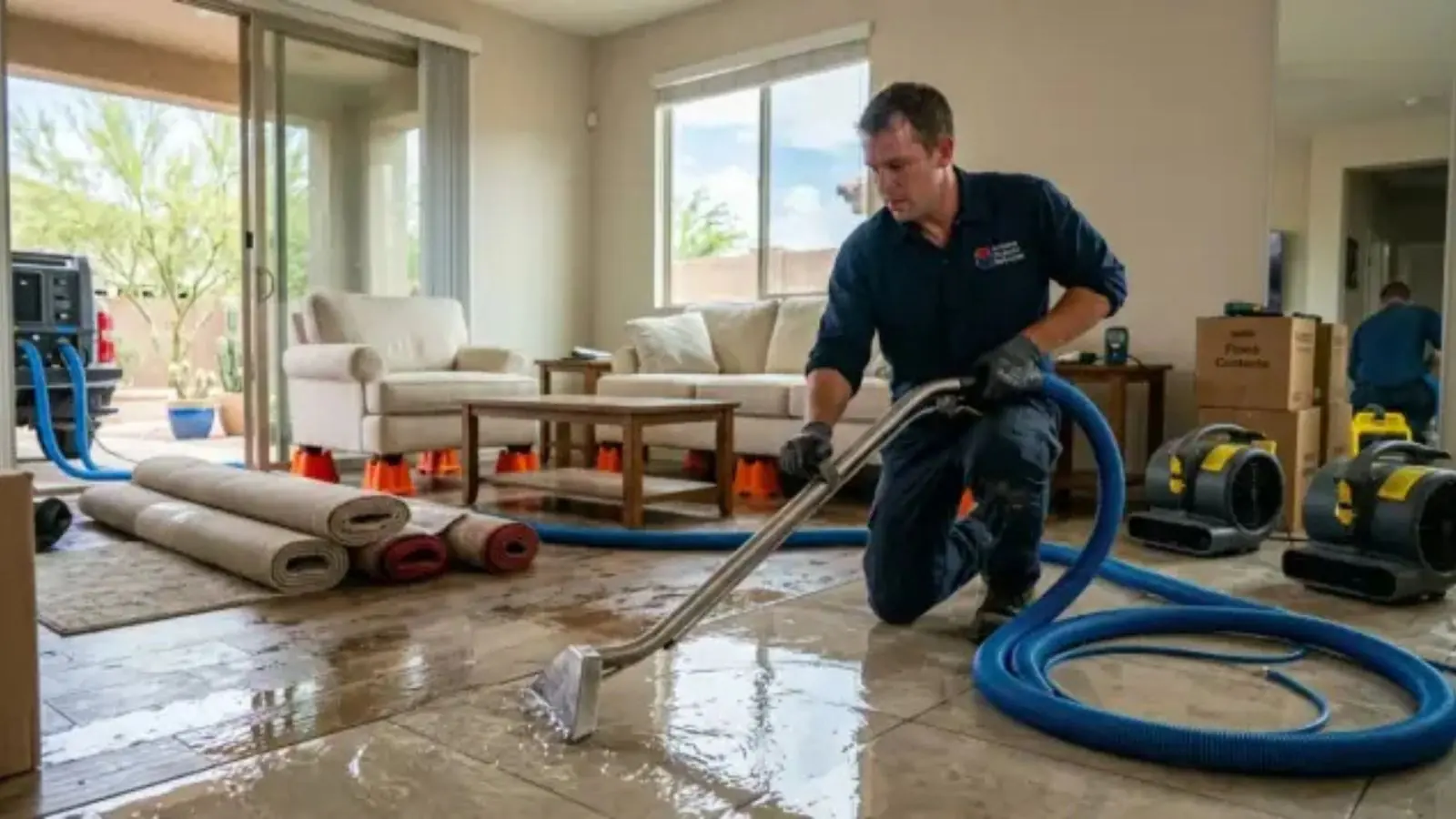
Standing water is an emergency from the first inch, so call (817) 623-9267 right now because the line is answered 24/7. Before anyone arrives, stop the source and close the main water valve. If you can reach the panel while standing dry, turn off power to the wet areas, then lift valuables off the floor and keep people and pets out of any water that may be contaminated.
When standing water is an emergency
Water sitting on a floor does not stay on the floor. It wicks into drywall, seeps under baseboards and works down into the subfloor. The City of Hurst floodplain page says only one inch of water in an average home can cause more than $25,000 in damage.
That is a good reason not to wait for morning. Same-day dispatch is available when crews are free, and calls at night, on weekends and on holidays are answered the same way.
Stay out if electricity or sewage is involved
If water is touching electrical panels, outlets or cords, or if sewage is in the water, stay out of the room. Cut power only if you can reach the panel without stepping into water.
Call 911 or the utility for electrical or gas danger before you call the restoration line.
How water gets pulled out
- Confirm the water has stoppedThe source is closed off first, because pumping a room that keeps refilling only wastes time.
- Pump the deep waterSubmersible pumps move several inches of water out of a basement, garage or crawl space.
- Extract from surfacesExtraction units pull water from carpet, pad and hard floors until only dampness remains.
- Check what is leftMoisture meters show how much water stayed behind in the walls and subfloor.
- Hand off to dryingAir movers and dehumidifiers go in so the structure keeps drying after the standing water is gone.
Pumps and extraction units compared
| Equipment | Best for | Limit |
|---|---|---|
| Submersible pump | Deep water in basements, garages and crawl spaces | Leaves a thin layer that needs other tools |
| Portable extraction unit | Wet carpet, pad and hard floors indoors | Needs a person on the floor, room by room |
| Truck-mounted extraction | Large areas and long hoses to reach farther rooms | Needs access for the truck and hose runs |
| Wet vacuum | Corners, stairs and tight spots | Slow for big volumes |
| Moisture meter and thermal imaging camera | Finding water left in walls and floors | Reads wetness, does not remove it |
Water still spreading?
Our 24/7 line is answered at any hour. Call (817) 623-9267 and describe what you see.
Burst pipe water damage: what to do first
A burst pipe can put gallons of water into a house every minute, so the first job is shutting off the water. Find the main shutoff valve, which is often where the line enters the house or at the meter, and turn it fully closed. TDI advises knowing where your shutoff valves are indoors and out before a problem starts.
Next, open a faucet at the lowest point of the house to drain what is left in the pipes. If you can reach the electrical panel without stepping into water, turn off power to the wet areas. If the panel itself is wet, stay away and call 911 or the utility before you call us.
Do not use a standard vacuum on wet floors or touch outlets, cords or appliances that are near water. Lift furniture legs off wet carpet, move small valuables and photograph the damage for your insurer. A burst line during a North Texas freeze is a common cause, and the average freeze-free period runs from March to November, so cold snaps outside those months can still catch pipes.
Crawl space water from a failed irrigation backflow or similar
Callers sometimes find water standing under the house after a broken irrigation backflow device or a cracked line near the foundation. It is easy to miss because the water is out of sight. Floors can feel soft, a musty smell can build, and the water bill can climb with no visible leak.
Crews close the irrigation supply, pump the water out of the crawl space and check the subfloor and insulation with moisture meters. Wet insulation is usually removed because it holds water against the floor above. If water keeps arriving from the yard, the source has to be fixed before drying can finish. That kind of seepage is not a waterproofing job, and restoration only addresses the water that is already inside.
After the water is out
Removing the water is step one. Wet drywall, pad and belongings then go through water damage cleanup, and the walls and floors that remain are dried with the methods described on the water mitigation page. If the water came from a storm or creek rather than a pipe, the rules differ, and flood damage restoration explains how.
Water left in place for a day or more can lead to mold, which is handled under mold remediation. Work follows ANSI/IICRC S500, the published standard for water damage work, and you can ask any company whether its crews use it.
What changes the price of water removal
- Water category, since sewage or outside water adds protective steps and disposal.
- Affected square footage, which decides how long extraction takes.
- Materials involved, because carpet, pad, hardwood and concrete respond differently.
- Drying days and equipment, once the standing water is out.
- Rebuild scope, which depends on how much must be removed or replaced.
The scope and price are explained before work starts, and you can ask for a real number by calling.
Insurance and removal
Texas Department of Insurance guidance says sudden and accidental water damage, such as a burst pipe or a broken washer hose, is often covered. Gradual leaks usually are not, and flood damage is excluded from standard home policies. Check your policy and ask your insurer.
Report the loss as soon as possible, take photos or video before work, and keep receipts for temporary repairs. Keep damaged items until the adjuster has seen them.
Water removal around Hurst
For a water main break, a flooded street or a problem at the meter, call the City of Hurst Public Works Dispatch at 817-788-7212, which is staffed around the clock. The City's Water Division maintains about 205 miles of water lines and about 4,633 system valves, so a street-side issue is theirs to shut down.
Ponding after heavy rain is more common in spring and fall, the wettest periods. The City of Hurst floodplain page says localized street and yard flooding has not been mapped, so check the FEMA flood map for your address. Keep drainage ditches on your land clear, and never dump debris in a ditch or creek, which is illegal in Hurst. A similar service for our neighbors is on the Euless service page.
Frequently Asked Questions
Yes. The line at (817) 623-9267 is answered at any hour, and crews are dispatched same day when available.
The scope is explained on the call before work starts.
The irrigation line is shut off, then a submersible pump moves the water out and moisture meters check the subfloor.
Wet insulation is typically removed, and drying equipment is set up before it is closed back up.
Close the main water valve, drain remaining water from a low faucet and move valuables to dry ground. Turn off power to wet areas only if you can reach the panel dry.
Call the restoration line once the water has stopped.
Not if outlets, cords or the panel are near the water, or if the water may be sewage. Electricity and water together can hurt people.
Wait for the power to be cut safely and for guidance from the dispatcher.
A single inch is enough to soak carpet, pad and the lower part of drywall. Even less than that can cause trouble if it sits.
Call whenever water has come in and will not dry on its own within a few hours.
Both. Extraction is the first stage, and air movers, LGR dehumidifiers and moisture meters follow so the structure dries.
The plan is laid out before work begins.