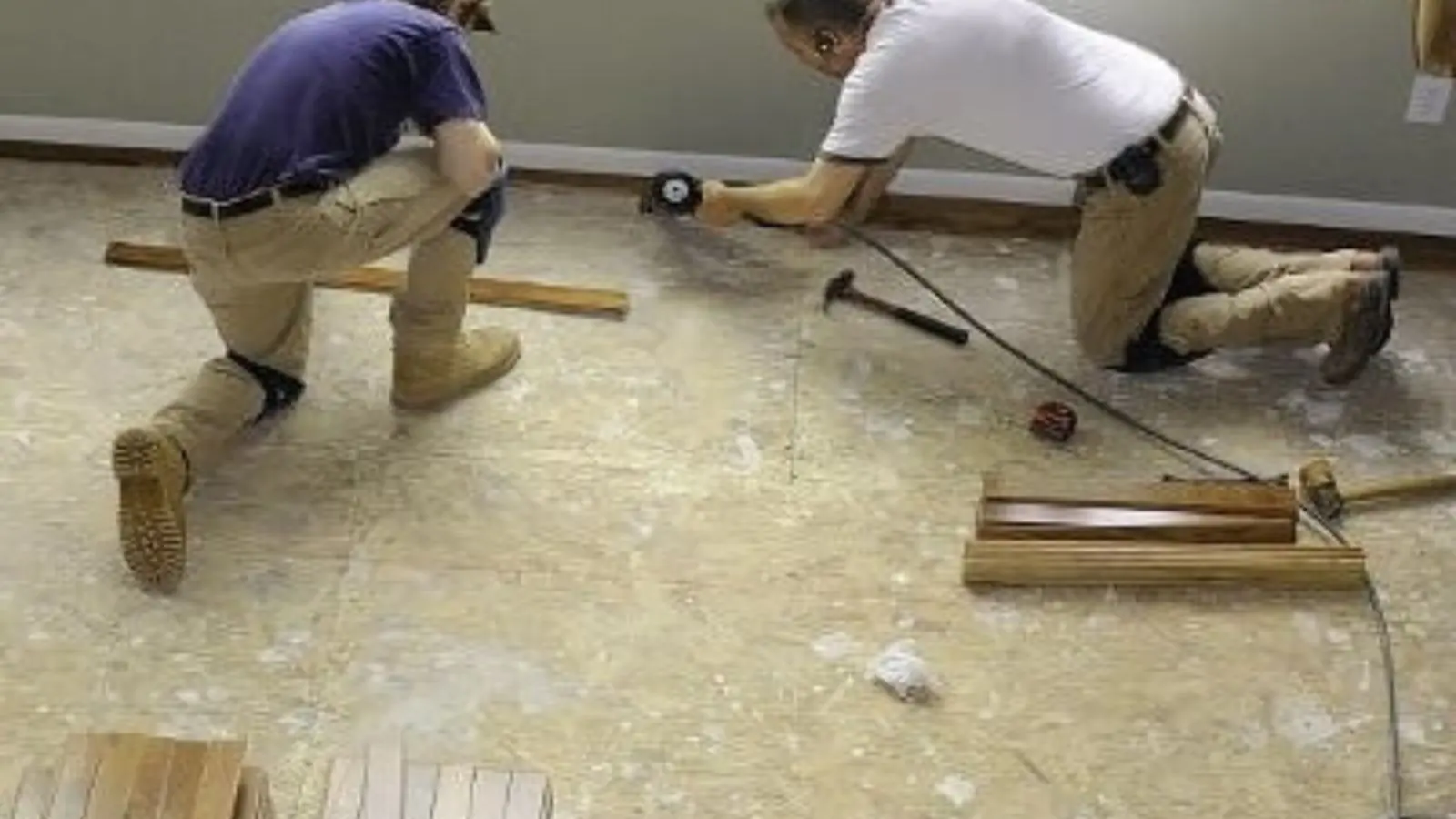
Once the water is gone and the structure is dry, the rebuilding can start. Water damage repair covers the drywall, insulation, flooring, paint, cabinets and trim that were removed or can no longer stay. Hurst Water Damage Pros plans each repair around documented dry readings, so new materials go onto wood and framing that are truly ready for them.
Why Repairs Wait for Documented Dry Readings
Wet framing under fresh drywall is how a small leak turns into a second job. Paint and flooring trap moisture, and trapped moisture feeds mold. That is why the order matters: stop the source, dry the structure, confirm the numbers, then rebuild.
Drying work follows ANSI/IICRC S500, the published standard for professional water damage restoration. You can ask any company whether its crews work to it. Crews log moisture meter readings in the affected materials and compare them to a dry reference in the same house. Thermal imaging cameras help find wet pockets behind finished walls, but the meter readings are what clear a repair.
- Confirm the source is fixedA repaired supply line, sealed roof penetration or cleared condensate line comes before any new finish goes up.
- Read the structureMoisture meters check studs, plates, subfloor and the back of drywall against a dry reference reading.
- Agree on the scopeYou see what comes out, what stays and what is rebuilt, along with the price, before work starts.
- Rebuild in orderInsulation, drywall, flooring, cabinets, trim and paint go back in the sequence that keeps finished work clean.
Ceiling and Wall Water Damage Repair
A brown stain on a ceiling, a sag that holds water like a pillow, or a patch of wall that feels soft under your thumb all point to drywall that has absorbed more water than it can release. Drywall wicks moisture upward and sideways, so the visible stain is usually smaller than the wet area.
Common Hurst sources include an upstairs toilet or supply line leak that drips through the floor below, a bathroom ceiling stain from a slow drain or tub overflow, and roof leak intrusion after a storm. Summer heat adds another: air conditioner condensate lines and drain pans can back up and soak the ceiling underneath an attic unit.
Repair depends on how long the board stayed wet. A small, quickly dried stain may only need stain-blocking primer and paint. Sagging, crumbling or soft drywall is cut out, usually past the damaged area to the nearest framing, and the insulation behind it is checked. Ceiling texture is matched after patching, which takes more skill than the patch itself.
If a ceiling is bulging with water, a small relief hole lets it drain into a bucket before it fails on its own. Keep people out from underneath and call. Fresh stains that keep growing mean the source is still active and no repair should start yet.
Repair or Replace by Material
Not everything that got wet has to be thrown away, and not everything that looks fine should stay. The table shows the usual reasoning, with the trade-off for each material.
| Material | Usually repaired or dried when | Usually replaced when |
|---|---|---|
| Drywall | Wet briefly with clean water, firm, and reads dry | Soft, sagging, stained from repeated wetting, or exposed to dirty water |
| Batt insulation | Fully dried before it compressed | Matted, stained or wet long enough to hold moisture |
| Solid hardwood | Cupping is mild and boards can be dried flat | Boards are warped, split or finish has failed across the room |
| Laminate and engineered wood | Rarely, and only if the edges stayed dry | Edges swelled or layers separated |
| Cabinets | Face frames and boxes dry with the toe kick cut away | Particleboard bases swelled or doors will not hang |
| Baseboard and trim | Solid wood that dried straight | Fiberboard that swelled or crumbles |
Replacing costs more up front but removes doubt. Keeping a material costs less but risks a hidden wet spot showing up later. A good scope tells you which applies to each item.
Water still spreading?
Our 24/7 line is answered at any hour. Call (817) 623-9267 and describe what you see.
Hardwood Floor Cupping and Drying
Cupping is when the edges of each board rise higher than the center. It happens because the underside of the board took on more moisture than the top. In Hurst homes, two causes show up often: a slow air conditioner condensate line leak that wets the floor near a closet or hallway, and a failed washer supply valve that spreads water across a laundry room.
Some floors can be saved. If the boards are only mildly cupped and the subfloor is intact, crews can dry the floor with air movers and LGR dehumidifiers, sometimes with panels that pull moisture from the board surface. Drying takes days, not hours, and the boards may relax back toward flat as the readings come down.
Other floors cannot. Boards that are crowned, split, buckled off the subfloor or stained by dirty water usually have to be replaced. So do floors laid over a wet subfloor that cannot be dried in place.
Sanding is the last step, never the first. Sanding a cupped floor before moisture readings are normal can leave you with gaps and a new cup once the boards finish drying. Wait for documented readings, then sand and refinish.
Matching Paint, Texture and Trim
A new patch on an old wall rarely matches by accident. Old paint fades, sheen changes, and wall texture varies from house to house. The usual fix is to paint the full wall, or break at a corner, rather than dab the repaired spot.
For trim and flooring, an exact match may not exist anymore. Your options are a close substitute, replacing a longer run so the change falls at a doorway, or refinishing the whole room. Each choice affects price, and you should hear the trade-offs before the work begins.
Insulation After Water
Wall and attic insulation soaks up water and holds it against the framing. Batt insulation that got wet from a ceiling leak is often removed, since it mats down and loses its job. Insulation that stayed dry behind a dry wall can stay. Crews check with a moisture meter before deciding rather than guessing from the surface.
What Affects the Cost of a Rebuild
- Water category: clean supply-line water is a simpler job than water that carried contamination.
- Affected square footage: a single ceiling patch and a whole room of flooring are different projects.
- Materials involved: solid hardwood, custom cabinets and textured ceilings take more time than standard drywall.
- Drying days and equipment: longer drying with more air movers and dehumidifiers raises the total.
- Rebuild scope: how much comes out, and whether finishes must match, sets the final labor and materials.
Scope and price are explained before work starts. If you want a real number for your house, call and describe what happened.
Insurance Notes for Repairs
Texas Department of Insurance guidance says most homeowners and renters policies cover sudden, accidental water damage, such as a broken washer hose or burst pipe, while gradual leaks and neglect are often not covered. Check your policy and ask your insurer what applies to your loss.
Take photos or video before repairs begin, keep damaged items until the adjuster has seen them, and hold off on permanent repairs until your insurer has inspected. Temporary repairs are fine if you keep receipts. Tell your insurer promptly, because hidden damage generally has to be reported within days after you first see it.
What to Do Before a Crew Arrives
Before repairs begin, the structure has to be safe and dry. These steps protect you and keep the record clear.
- Shut off the main water valve if the source is plumbing.
- Turn off power to wet areas only if you can reach the panel without standing in water.
- Do not use ceiling fixtures under a sagging, wet ceiling. Keep people out of that room.
- Do not remove wet materials until they are photographed.
- Keep receipts and photos for your insurer.
Rebuilding in Hurst
Hurst homeowners have a stake in doing this right. The Census reports a median owner-occupied home value of $315,200 and 58.0 percent owner-occupancy, so a water-stained ceiling or lifted floor affects resale value as well as comfort. Keep your photos, moisture readings and scope notes together so any future buyer or inspector can see the repair was done on dry material.
The City of Hurst runs its own water system, and the 24/7 Public Works Dispatch handles water line problems at the meter and street. A leak inside the house is yours to stop.
After that, drying and cleanup come first, covered in our water damage cleanup work. Mold concerns go to mold remediation, and large outdoor flooding falls under flood damage restoration. Neighbors can read about service in Bedford as well.
Frequently Asked Questions
Repairs begin when moisture readings show the framing, subfloor and remaining materials are dry. That can be a few days or longer, depending on what got wet and how long it stayed that way.
Starting sooner risks sealing moisture behind new drywall or flooring.
Only if the area is dry, the source is fixed and the drywall is still firm. Even then, a stain-blocking primer is needed or the brown mark comes back through.
A ceiling that is soft, sagging or stained again after drying needs to be cut out and replaced.
Sometimes. Mildly cupped boards over a sound subfloor can relax as they dry, and the readings tell you when to judge them.
Crowned, split or buckled boards usually have to be replaced, and sanding should wait until moisture is normal.
Often, yes. Wet batt insulation mats down and holds water against the framing, so it is usually removed.
Insulation that stayed dry behind a dry wall can be left alone after a meter check.
The most reliable approach is to paint the entire wall to a natural break, such as a corner. Spot painting often shows because old paint has faded.
Ceiling and wall texture is matched after patching and before paint.
Texas Department of Insurance guidance says sudden, accidental water damage is often covered and gradual leaks often are not. Flood is excluded from standard home policies.
Check your policy, ask your insurer, and document everything before repairs.