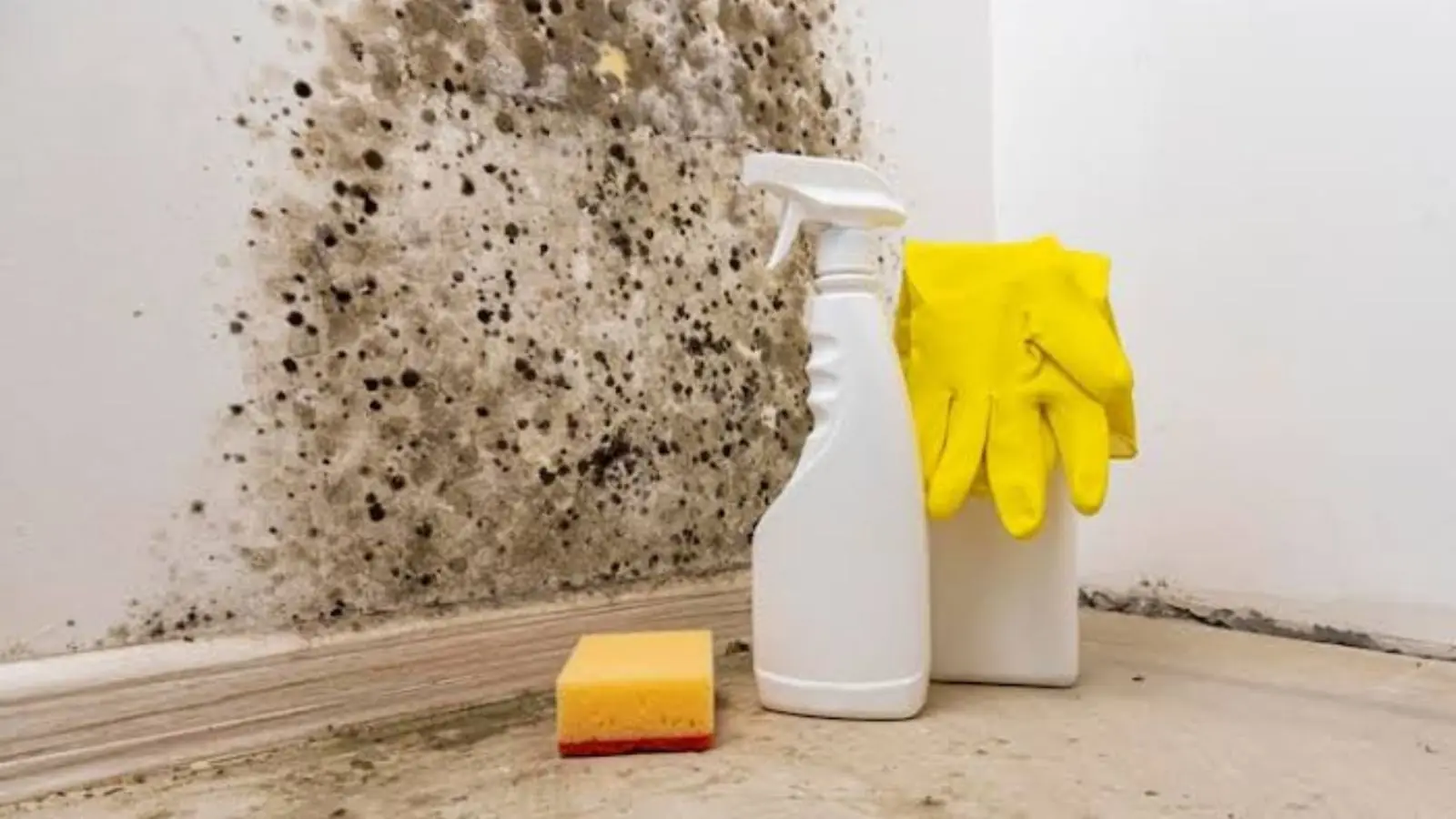
You get rid of dark or black mold the same way you handle any mold: find and stop the moisture, then have the affected material cleaned or removed under controlled conditions. Color does not identify what is growing. If the area is small, under 25 contiguous square feet, Texas rules generally allow unlicensed cleanup. Larger areas call for a licensed assessor to write a protocol and a licensed remediator to follow it.
Myth versus fact
| Common belief | What is actually known |
|---|---|
| Black color means a specific dangerous type | Color varies with age, moisture, material and light. It cannot identify a type |
| I can tell by looking | Only laboratory analysis ordered by a licensed assessor identifies what a sample contains |
| Bleach fixes it | Spraying a surface does not remove growth from porous materials and adds moisture to wet drywall |
| Paint with sealant covers the problem | Paint hides a stain. It does not dry a wall or remove material |
| It is only a smell, so ignore it | A persistent musty smell usually means moisture is still present somewhere |
| Testing tells me if my home is safe | Testing describes samples taken from an area. It does not answer health questions, which belong to a physician |
The name "black mold" is more of a headline than a diagnosis. Dozens of kinds can look dark in a home, and many look similar to a homeowner. For that reason, this guide stays with what you can see, what you can measure and what you should do.
What to do in the first hour
- Leave it aloneDo not scrub, sand or brush it. Disturbing growth throws dust into the air and makes the cleanup bigger.
- Stop the waterTurn off a leaking fixture, close the valve or take the pan off the air conditioner line if you can do so safely.
- Take photosShow the area from a few feet back and from close up. If you have a claim, this documentation matters.
- Keep air from spreadingClose the door to the room and turn the blower off if the area is near a vent.
- Size it upMeasure roughly. Under 25 contiguous square feet may generally be handled by unlicensed people. Over that, or if unsure, call a professional.
Water still spreading?
Our 24/7 line is answered at any hour. Call (817) 623-9267 and describe what you see.
Testing by a licensed assessor
In Texas, TDLR licenses mold assessment, meaning the people who inspect and test, separately from mold remediation, meaning the people who clean and remove. A licensed assessor can find moisture sources, take samples when appropriate and write a protocol with cleanup criteria.
Homeowners sometimes want a test before anything else. Testing can be useful for large or hidden problems, for disputes with a landlord or seller, or for confirming a result after cleanup. For a small, obvious patch on a bathroom wall, finding and fixing the moisture is usually the more productive step.
Testing and cleanup follow ANSI/IICRC S520. Ask any company which standards it uses and verify any license number on the TDLR public license search.
What not to do
- Do not disturb a large area. Cutting, scraping or sanding spreads dust through the home.
- Do not paint over growth or seal it in with caulk.
- Do not spray bleach or other chemicals on wet drywall and call it fixed.
- Do not run fans or a vacuum on the area. Household machines move dust around.
- Do not mix cleaning products. Some combinations release fumes.
- Do not throw away damaged items before taking photos if you may file a claim.
Health questions go to a physician
If anyone in the home is concerned about symptoms or sensitivity, talk with a physician. A restoration company cannot diagnose anything or say what exposure may mean for a person.
What we can do is explain what is growing on a building material in plain terms and what removal involves.
How containment works on larger jobs
Containment keeps dust and spores from drifting into clean rooms while material is removed. A crew builds sealed plastic barriers around the work zone, covers vents and uses air filtration set to pull air through the zone. Workers enter and exit through a controlled opening.
Affected drywall, insulation or flooring is cut out, bagged in the work area and carried out. Surfaces left in place are cleaned and the space is dried. The assessor then checks the area against the protocol's criteria before containment is taken down.
That check matters. Under TDI guidance, a mold claim expects an inspection confirming removal and that the cause was fixed, plus a certificate of removal.
Keep your own records too. Photos before and after, the written protocol, receipts and the certificate of removal belong in one folder, because lenders, insurers and future buyers may ask for them.
Clearance is not a formality. After removal, the assessor looks at the area against the criteria in the protocol, which can include visual checks, moisture readings and sampling. If the area does not meet the criteria, the remediator returns to correct it before the barriers come down.
Dark growth after a leak or flood
Most dark patches follow a wet event. If the wall, ceiling or floor was recently soaked, begin with water mitigation so the structure dries. Drying a wet structure early often shrinks the amount that needs removal later.
TDI says mold from a flood is not covered by a home policy, and flood coverage needs to be a separate policy. A policy may cover mold that develops on a covered, damaged item, but most do not include cleanup and testing after the damaged item is removed. Check your policy and ask your insurer.
What restoration can and cannot do
Removal and cleaning take the affected material out of the house. A drying plan and a repaired water source reduce the odds of recurrence, yet no honest company can promise it will not return. Conditions decide that.
Costs depend on the area involved, the materials, whether containment and air filtration are needed, the drying time and how much rebuild follows. For a clear explanation of your situation, contact the mold remediation team by phone, and scope and price will be explained before work starts.
Frequently Asked Questions
Color does not tell you what the growth is or how it affects any person. Treat all visible mold as a sign of moisture to fix and material to remove. Health questions belong to a physician.
Store kits can show that spores exist, but spores are in most homes. They do not tell you how much, where the moisture is or what cleanup is needed. A licensed assessor connects results to the building.
Large jobs involve plastic barriers, bagged debris and filtered air. The aim is to keep the mess inside the work zone, and a crew should explain the plan before it starts.
It depends on the area, the materials and drying time. Small jobs may take a day or two, while larger projects with containment, drying and clearance can stretch to a week or more.
Texas licensing rules treat owners and managers of buildings with fewer than 10 dwelling units separately from larger properties. Lease terms and Texas property law decide duties, so ask a tenant advocate or attorney for guidance.
Dark Mold Questions in Hurst Homes
Texas shapes how this works. TDLR licenses both mold assessment and mold remediation, and it publishes a license search anyone can use. Before a company starts work in your Hurst home, ask for its license numbers and look them up yourself.
North Texas summers also feed these calls. The National Weather Service in Fort Worth notes July and August highs are often 100 or more, so condensate lines, drain pans and attic units leak into ceilings. Dark spots on a ceiling below an air conditioning unit are a cue to inspect that equipment for water before anything else.
In nearby Haltom City, the sewer lateral belongs to the property owner under city policy, which makes a backup there a homeowner issue. In Bedford, debris can clog storm drain inlets during heavy rain. For Hurst, the City of Hurst Public Works dispatch handles water problems on the city side.
Sources: Texas Department of Licensing and Regulation, Texas Department of Insurance, National Weather Service Fort Worth.