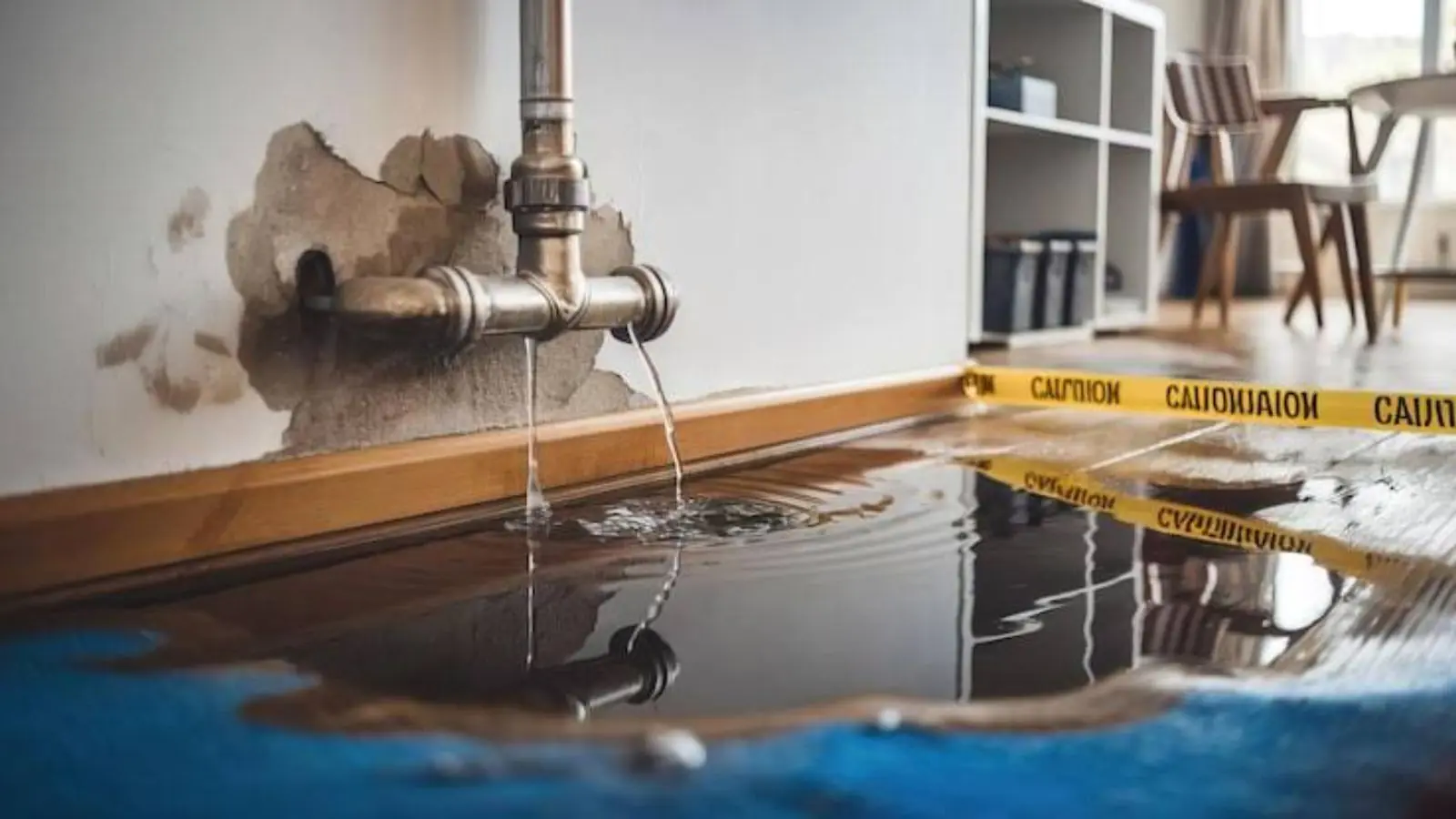
Safety before anything else
Water and electricity do not mix. If water is near outlets, a panel or running appliances, stay out of the wet area and shut off power at the breaker only if you can reach it without standing in water. If you cannot, call an electrician or the utility.
Shut off the water at the nearest fixture valve or the main, then keep power away from wet areas, lift what you can off the floor and photograph the damage. Those four moves cover most of what matters in the first hour. Cleanup and drying come next, and they work best when you start them the same day.
Step one is finding the shutoff
Texas Department of Insurance advises knowing where your shutoff valves are, indoors and out. Most fixtures have a small valve near the supply line, such as under a sink or behind a toilet. The main valve for the house is usually where the line enters the home or near the meter outside.
Turn valves clockwise until they stop. If a fixture valve is stuck or the pipe is spraying too hard to reach it, go to the main. Once the water stops, open a faucet at the lowest point to drain what is left in the line.
When the problem is outside your house
If water is bubbling up in the yard or street, or your own main valve will not shut, the issue may sit on the city side. The City of Hurst runs its own water system and has a 24/7 Public Works Dispatch line at 817-788-7212 for water, wastewater, traffic and street problems. Call that number for street-side issues.
A leak between the meter and your house is usually the owner's problem, and one inside the walls certainly is. If you cannot tell which side the leak is on, ask the dispatcher where city responsibility ends.
Know the valve before you need it. Walk the house once and tag the main with a bright label, then show everyone who lives there. A valve you have never turned may be stiff, so exercise it gently now rather than in a panic later.
Water still spreading?
Our 24/7 line is answered at any hour. Call (817) 623-9267 and describe what you see.
A first-hour timeline
- Stop the flowClose the fixture valve or the main. Note the time you did it for later.
- Make power safeSwitch off breakers for wet rooms only if reaching them is dry and safe. Unplug devices from dry outlets and leave wet ones alone.
- Lift valuablesRaise rugs, boxes, shoes, electronics and small furniture onto counters or beds. Pull photo albums and papers into a dry room.
- Photograph and recordTake wide photos, close photos of the burst section and a short video through the room. This helps if you later contact your insurer.
- Remove surface water carefullyUse towels, a mop or a wet vacuum rated for water, on safe ground away from outlets. Skip it if the flooded area is large or the power question is unresolved.
- Call for helpIf more than a small area is wet or you see water in walls or ceilings, call a licensed and insured restoration company. Scope and price should be explained before work starts.
What to lift and what to leave
Lift now
Electronics, paper, books, shoes, bedding, fabric furniture cushions and small rugs. These soak up water quickly and are hard to save.
Leave in place
Heavy furniture, large appliances and anything that needs two people. Slide foil or plastic under legs if you can do it safely.
Open up
Open cabinet doors under sinks and pull baseboard covers if they are loose. Air helps surfaces dry, though it is not a full dry-out.
Keep for later
The burst piece of pipe, damaged items and any receipts. TDI advises keeping damaged items until the adjuster has seen them.
Cold weather and why pipes fail
Freezing weather is a common reason pipes split, since water expands as it freezes. The National Weather Service says the average freeze-free period in North Texas runs from March to November, which means freezes can happen in the other months. That leaves a longer winter window than many owners expect.
TDI advises insulating exposed pipes, starting in the attic, and wrapping outdoor faucets before a freeze. Do it before the forecast turns, since pipes in outside walls and attics lose heat first. Not every burst is cold-driven. Old fittings, shifting soil and worn supply lines also fail.
What happens after the water stops
Standing water is only half the problem. Wet drywall wicks moisture upward, flooring can cup or lift, and insulation holds water against framing. Mold can start within about a day under the right conditions, according to TDI, so drying should begin soon.
Our emergency water removal work pulls standing water, and our water mitigation work follows with drying equipment and moisture readings. Neighbors in Bedford and Colleyville call about the same set of burst pipe situations.
Honest limits apply. Restoration can remove water and dry the structure, but a pipe that has failed still needs a plumber to repair or replace it. We handle the water damage, and a licensed plumber handles the pipe.
Be careful with a ceiling that holds water. A bulge is a sign that water has pooled above it, and the weight can bring it down without warning. Keep people and pets out of the room below, and do not stand under it. Call for help, since a pooled ceiling is not a do-it-yourself job.
Common burst pipe situations
A line under a kitchen sink splits and floods the cabinet and the floor around it. Here the main concern is the cabinet base and the flooring beneath. These often hide moisture longer than the surface suggests.
A supply line in an upstairs bathroom lets go and water appears on the ceiling below. Expect to check both floors. A ceiling that sags needs careful handling, so keep people clear of it and call for help.
If you want to talk through any of these, call us and describe what you see. We can explain what drying involves and what the scope would cover.
Frequently Asked Questions
Only if you can reach the breaker without standing in water. If the panel or outlets are near the wet area and you are unsure, stay out and call an electrician or the utility.
Sometimes. Water travels inside walls, so a restoration crew uses moisture meters and often thermal imaging to find wet areas. Whether a wall opens depends on the readings and the materials.
Call the City of Hurst 24/7 Public Works Dispatch at 817-788-7212. They handle water and street problems on the city side, and they can tell you where the city's responsibility ends.
Stop the water and make the area safe right away. Wet materials keep absorbing water, and mold can start within about a day, so ask a restoration company about next steps soon.
Both, in order. A plumber fixes the pipe, and a restoration company dries the structure. Many owners shut off the water, call a plumber, and then call us about the wet areas.
Hurst Water System Notes for Pipe Emergencies
Hurst's Water Division maintains about 205 miles of water lines and 4,633 system valves, according to the city. A pressure problem on the street may be a city line issue even when only your tap is affected. If neighbors report the same thing, call the dispatch line before you assume the problem is inside your walls.
North Texas weather swings between hot summers and freezes in the colder months. July and August bring the heat that keeps air conditioners running hard, and those condensate lines are a real leak source too. After you shut off a burst supply line, check the AC drain pan if water is near the unit.
Sources: City of Hurst water division information, Texas Department of Insurance, National Weather Service Fort Worth.