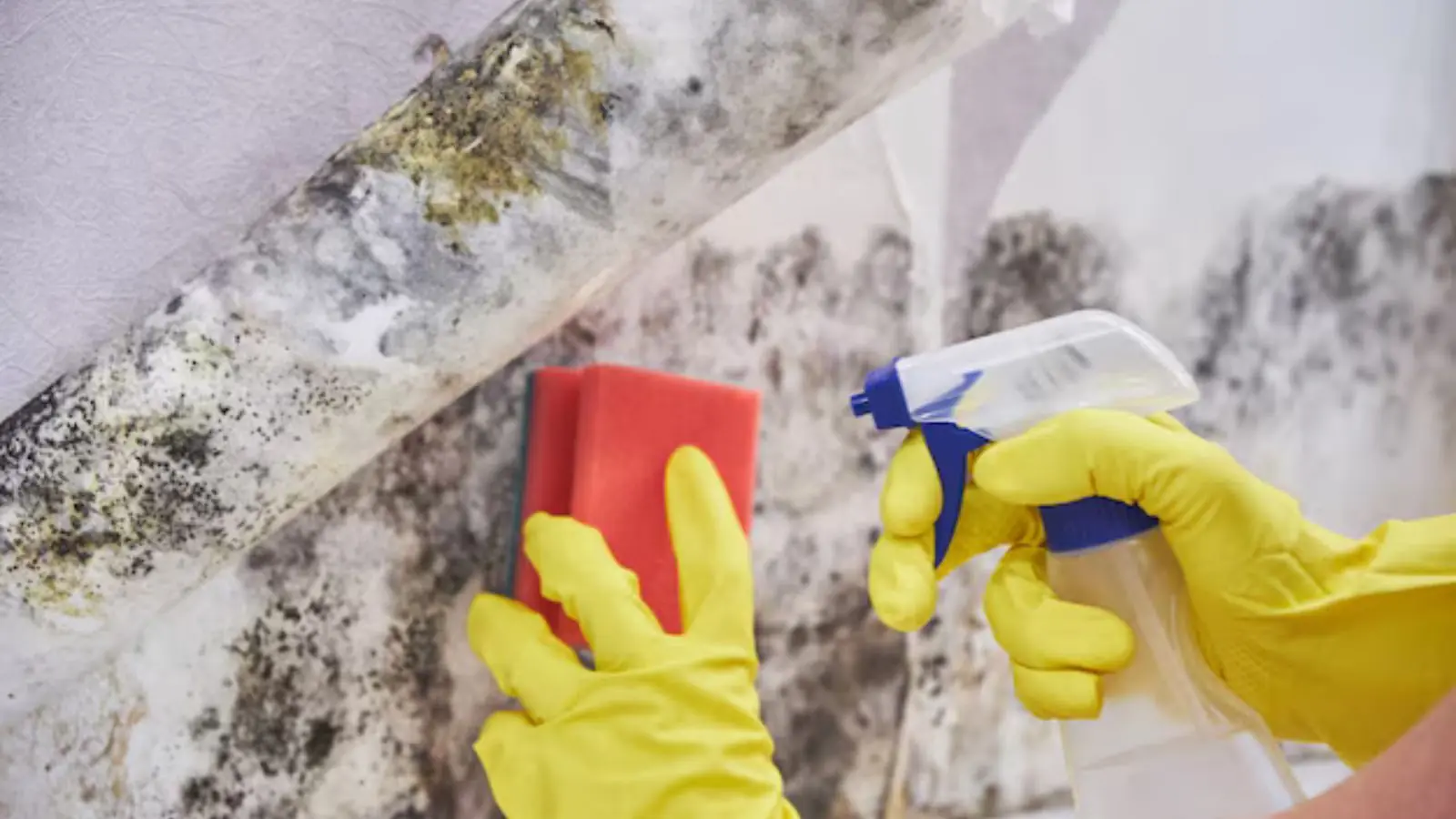
A small patch of mold or mildew on a painted wall can often be wiped away, but only if the wall is dry underneath and the cause is fixed. If the drywall behind the spot is wet, soft or crumbling, the patch is a symptom and the board itself usually has to be cut out. The question to answer before you touch a sponge is simple: where is the water coming from?
Three common wall scenarios
Bathroom ceiling corners
Showers fill a bathroom with warm, wet air, and corners are the coolest, least ventilated spots. Moisture condenses there and sits. A weak or disconnected exhaust fan is the usual reason spots return in the same place. Professional containment and cleanup follow the published ANSI/IICRC S520 standard for mold remediation.
In this case the fix is often ventilation first, cleaning second. Check that the fan actually moves air, that it vents outside rather than into the attic and that the ceiling surface is dry before you repaint. Professional containment and cleanup follow the published ANSI/IICRC S520 standard for mold remediation.
Closets and walls behind furniture
A couch pushed flat against an exterior wall or a closet packed floor to ceiling blocks airflow. The wall behind runs cooler and holds humidity. Dark fuzzy patches or a musty smell appear at about knee height first.
Pull furniture a few inches off the wall, thin out the closet and watch the area for a few weeks. If the spots return even with more air, look for a leak inside the wall.
An exterior wall with a siding or window leak
Water can slip behind siding, around a window frame or through a failed seal and run down inside the wall. The interior side may show only a faint stain until the drywall is saturated. This is the case where cleaning alone fails most often.
Surface growth versus growth in the material
| Clue | Likely surface issue | Likely material issue |
|---|---|---|
| Feel of the wall | Firm, dry, painted | Soft, crumbling or bulging |
| Spread | Stays in a defined spot | Grows back after cleaning in days |
| Paint | Intact | Peeling, bubbling or stained through |
| Moisture check | Dry to a meter and to the touch | Reads wet or cool and damp |
| Smell | Faint | Persistent musty odor |
| Next step | Fix humidity, clean and monitor | Find leak, dry or remove the board |
Drywall is gypsum with paper facing. The paper is food for mold and the gypsum acts like a sponge, so when growth gets into the paper or the board, cleaning the painted face removes only what you can see.
Water still spreading?
Our 24/7 line is answered at any hour. Call (817) 623-9267 and describe what you see.
Why wiping with a cleaner often fails
A cleaner can lighten stains on the surface, but it does nothing about moisture sitting inside the wall. As long as that water remains, the surface darkens again. People often repeat the cycle three or four times before they realize the leak was the real task.
Spraying a strong chemical on a wet wall adds more moisture and does not remove growth from porous board. Painting over a spot hides it for a season. Neither approach addresses the cause.
Cleaning a small patch the careful way
- Confirm the wall is dryPress a dry paper towel against it for a minute. If it feels cool or damp, or the paint moves, stop and find the leak.
- Protect yourselfWear gloves, eye protection and an N95 or better respirator, and cover the floor below with plastic.
- Clean gentlyUse detergent and water on a damp cloth. Avoid scrubbing hard enough to scuff paper facing, and rinse with a clean damp cloth.
- Dry thoroughlyWipe with a dry towel and run a fan on the room for the rest of the day.
- Watch for a monthIf spots come back, the problem is inside the wall or in the room's humidity, not in your cleaning.
That is for surface growth that stays within about a hand's width. Texas rules say visible mold under 25 contiguous square feet may generally be cleaned by unlicensed people. Anything larger is a licensed-professional job, and anything that spans a wall cavity probably is too.
When drywall has to be cut out
- The board is soft, crumbles or feels damp after the source is fixed.
- Growth appears on both sides of the wall or through the paint in several spots.
- Insulation inside the wall is wet or has dark patches.
- A moisture meter reads high a few days after the leak is repaired.
- The area is larger than a hand span and keeps returning after cleaning.
Professionals cut out affected sections, usually extending past the visible edge, and bag the debris to limit dust. They dry the exposed cavity, check readings and confirm the framing is sound before closing it back up. A wall that is cut and dried promptly often keeps its framing and insulation salvageable, which keeps rebuild smaller.
If the wall got wet from a plumbing, roof or siding failure, drying that wet cavity first is water mitigation work, and the mold portion is a mold remediation job. These are often done in sequence on the same wall.
What restoration can and cannot do
Restoration crews dry, remove and clean. They do not repair a roof, reseal a window or fix siding. After the cleanup, you will still need the right trade to close the water path, and the remediation team can help you identify where it was.
No honest company promises that mold will never return. What they can do is remove affected material, document that the area is dry and tell you what conditions caused it. Scope and price are explained before work starts, and cost depends on the wall area, the materials, the drying needed and the rebuild.
Frequently Asked Questions
People use the words loosely. Mildew usually describes a flat surface growth, often on bathroom walls. Either way, the cause is moisture, and the cleanup depends on what material it sits on.
Paint covers a stain but does not dry a wall. If moisture remains, growth can come through. Clean, dry and fix the source first, then use any paint after the wall tests dry.
Look for bubbling paint, a cool feel, a soft spot or a musty smell. A professional uses a moisture meter to read the board and framing without cutting. Home meters exist, but results depend on technique.
TDI guidance says mold on a covered, damaged item would be covered, while gradual leaks and seepage usually are not. Check your policy, take photos before repairs and ask your insurer about your specific case.
Tell your landlord or property manager first and take photos. Renters should not take on repairs to a building they do not control. Texas licensing rules do not require owners or managers of buildings with fewer than 10 dwelling units to be licensed for mold work on that property.
Hurst Homes, Walls and Summer Air Conditioning
North Texas summers are hot. The National Weather Service in Fort Worth notes that July and August highs are usually in the 90s and often 100 or more, so air conditioners run hard. A clogged condensate line or a drain pan overflow can wet a wall or ceiling for weeks without notice, so look at the line and pan before you blame a stain on the paint.
Spring and fall are the wettest times, mostly from thunderstorms, and wind-driven rain finds weak points at siding seams and window frames. After a heavy storm, look at interior walls under windows and along exterior corners for new stains. If you see one, find the exterior entry point rather than wiping the inside.
Colleyville keeps its Building Inspections office at 100 Main Street, and homeowners in Colleyville ask there about repair scope. In Euless, the city's Public Works Utility Division provides 24 hour service for water problems. For Hurst, ask the City of Hurst Building Inspections office whether wall repairs of any size need a permit.
Sources: National Weather Service Fort Worth, Texas Department of Insurance, Texas Department of Licensing and Regulation, City of Hurst.