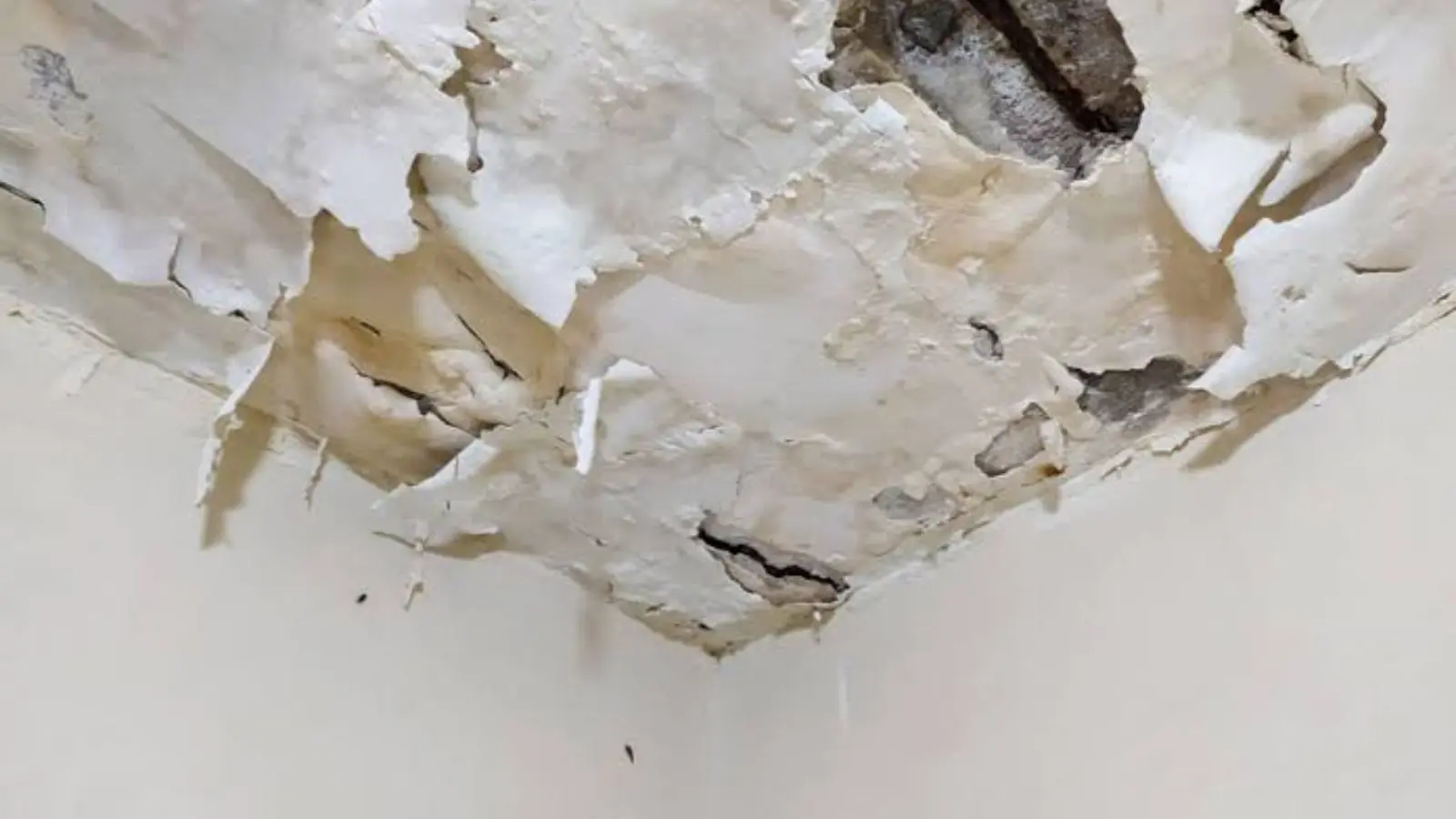
The cost of fixing a water damaged ceiling depends mostly on where the water came from, how long the ceiling stayed wet, and how much of it has to be replaced instead of dried. A dry stain from an old leak is a patch and paint. A soaked, sagging ceiling with wet insulation above it is a demolition, drying and rebuild job. Scope and price are explained before work starts.
Six things that set the price of a ceiling repair
Every ceiling job is priced from the same short list of factors. Knowing them helps you read any estimate you receive and ask better questions about it.
Source of the leak
Clean supply line water or AC condensate is easier to dry and keep. Roof water or sewer backup carries more contamination, so more material comes out.
Drywall or texture
Smooth painted drywall patches cleanly. Popcorn, knockdown or orange peel texture must be matched by hand, and that blending adds steps.
Insulation above
Wet insulation holds water against the ceiling board. It often has to be removed and replaced, which adds labor and material.
How long it stayed wet
Board that dried within a day or two is often saved. After several days it softens, stains bleed through and mold becomes possible.
Paint matching
A fresh patch shows against aged paint. Painters often coat the full ceiling to the nearest corner so the color reads evenly.
Ceiling access
Vaulted ceilings, stairwells and rooms full of furniture need extra protection, moving and sometimes scaffolding. That time counts.
None of these factors has a standard number attached. Two ceilings that look alike from the floor can be priced very differently once someone sees the attic side. That is why a fixed price quoted over the phone for an unseen ceiling deserves some doubt.
How the scope grows from stain to rebuild
| What you see | What is usually behind it | Likely repair path |
|---|---|---|
| Dry brown ring, firm board | A past leak that already dried | Seal the stain, patch if needed, texture and paint |
| Damp board, slight sag | A recent or active leak with wet insulation | Fix the source, dry or cut out, replace insulation, patch |
| Bulging or drooping ceiling | Water pooled above the board | Release safely, remove the section, dry the cavity, rebuild |
| Stain under an AC unit | Condensate overflow in the attic | Stop the unit, dry insulation, replace wet board, repaint |
| Dark spots or a musty smell | Moisture present long enough for mold | Handle mold first, then close up and finish |
Most real ceilings land between rows. A professional water damage repair scope starts with the lowest-cost path that actually works and moves up only when readings say it must.
Water still spreading?
Our 24/7 line is answered at any hour. Call (817) 623-9267 and describe what you see.
A sagging ceiling is a safety problem first
Stay out from under a bulging ceiling
Water adds weight quickly, and drywall softened by water can let go without warning. Move people and pets out of the room and keep them out until it has been released and checked.
Turn off power to that room at the breaker if water is near a light fixture or ceiling fan. Never poke a bulge from directly below. A trained crew can open it at the edge in a controlled way and catch the water.
When a crew cuts an inspection hole
An inspection hole is a small cut in the ceiling board, often about the size of a hand. It lets someone see and measure what a stain hides. It is the fastest honest way to learn whether insulation is wet and whether framing above is damp.
- Map the damp zoneA moisture meter and thermal camera trace the wet area from below. The cut goes at its edge or at the lowest point.
- Cut and lookA clean opening shows the insulation, the framing and the back of the board without tearing out more than needed.
- Take readingsBoard and wood readings set a baseline, so drying progress can be checked later with numbers instead of guesses.
- Choose the scopeThe choice is dry in place, cut out the damaged section, or rebuild. The scope and price are explained before work starts.
A tidy hole is simple to patch afterward. Skipping it can leave wet insulation sealed behind fresh paint, where it keeps feeding the problem.
What to do before the crew starts
- Stop the source if you can by closing a fixture valve or the main, or by switching off the AC unit if the stain sits under it.
- Move furniture and electronics out of the drip zone and cover whatever has to stay.
- Take photos and video of the ceiling before anything is repaired.
- Set a bucket under steady drips and keep the floor below dry.
- Leave wet paint and texture alone, since scraping spreads damage.
- Hold off on permanent repairs until your insurer has looked, and keep receipts for temporary ones.
What restoration can and cannot do
Restoration can dry a ceiling caught early, remove what cannot be saved, and bring the surface back to match the rest of the room. Drying work follows the ANSI/IICRC S500 standard, and you can ask any company whether its crews work to it.
It cannot fix a leak that is still running. If a roof, pipe or drain line keeps dripping, the new paint will stain again. Source repairs belong to a roofer, plumber or HVAC technician, and the best time to book them is right away.
If the damp area has spread, our water mitigation work comes first so the wet materials stop getting worse. When dark growth shows up, mold remediation steps come before any patching.
Insurance is a separate question. Texas Department of Insurance guidance says sudden and accidental water damage is often covered, while gradual leaks often are not. Check your policy and ask your insurer, and report hidden damage promptly after you first see it.
If you can see a stain, a sag or a drip, call and describe it. We also work with homeowners in Bedford and Euless, so a short drive does not change how we scope a ceiling.
Frequently Asked Questions
Only if the board is firm, fully dry and the leak is fixed. A stain primer can hide a dry ring, but paint over damp board traps moisture and the stain returns.
If the ceiling still feels cool, soft or looks bubbled, have it checked before covering anything.
From below, you usually cannot. A moisture meter helps, but an inspection hole or attic access gives a direct look. Wet insulation looks flattened, dark or clumped.
Sagging usually means insulation and board are both heavy with water.
Yes. The National Weather Service says large hail and damaging winds occur nearly every year somewhere in North Texas, and roofs take the first hit. A small opening can send water down slowly for days.
Look at upstairs ceilings and the corners near exterior walls for new rings or bubbled paint.
Texas Department of Insurance guidance says mold can start within about a day in a wet area. Mold needs moisture, so fast drying matters.
If you see dark spots, do not scrub them. Call, and health questions belong with your physician.
It depends on the cause. Sudden, accidental events such as a burst pipe or a broken washer hose are often covered, while slow leaks often are not. Flood damage is excluded from standard home policies.
Read your policy, ask your insurer, and photograph the damage before repairs.
Hurst Ceiling Notes: Storms and Summer Heat
The National Weather Service Fort Worth says spring and fall are usually the wettest periods in North Texas, mostly from thunderstorms, and that severe weather peaks in spring. For a Hurst homeowner, that makes spring the season to look up after every big storm.
July and August highs usually reach the 90s and often 100 or more, which keeps air conditioners running hard. Condensate lines and attic drain pans can overflow, so a ceiling stain under an attic unit in summer deserves a quick look.
If a repair turns into a large rebuild, ask the City of Hurst building department whether a permit applies to your project. A short call before work begins avoids surprises later.
Sources: National Weather Service Fort Worth, Texas Department of Insurance, City of Hurst building department.