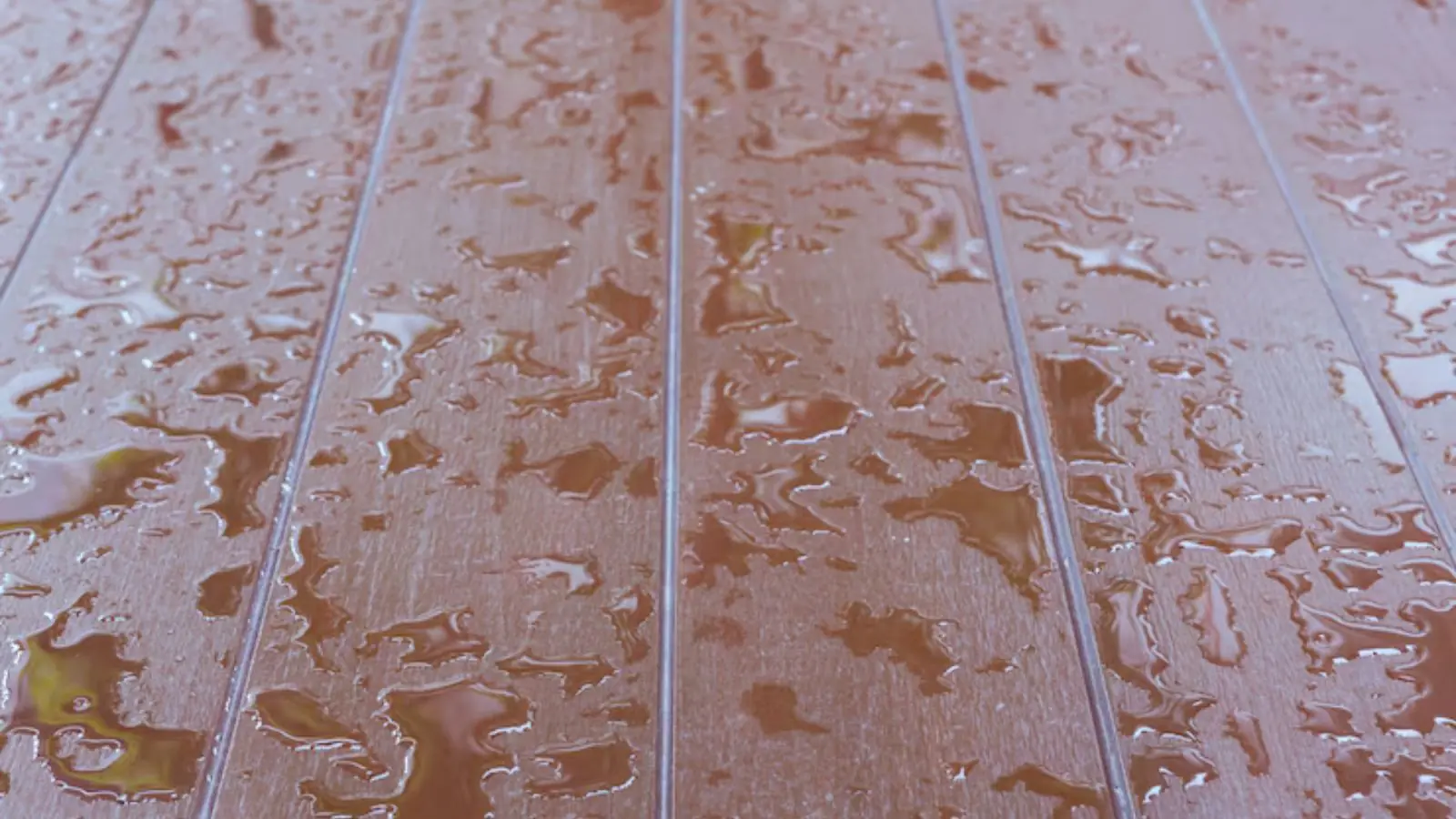
A wood floor that has been wet can often be dried and kept if the boards are caught early, the water was clean, and the subfloor underneath has not stayed soaked. Boards that are cupped or crowned frequently flatten as they dry. Boards that have buckled off the subfloor, or that stayed wet for a long stretch, are far more likely to need replacing.
Read the shape of the boards
| What you see | What it means | Usual outcome |
|---|---|---|
| Cupping: edges higher than centers | Moisture came up from below or the underside absorbed more | Often flattens after slow drying, then sand if needed |
| Crowning: centers higher than edges | Top surface took on water or was sanded while still cupped | May settle after full drying, then lightly sand |
| Buckling: boards lift off the subfloor | Heavy, long exposure pushed the floor up | Often needs board removal and replacement |
| Gaps between boards | Wood shrank after drying | Usually seasonal or from fast drying, may need filling |
| Black stains or a sour smell | Water sat long enough for decay or growth | Remove affected boards, then check below |
Shape alone does not decide anything. A cupped floor can look terrible and still dry back to flat, while a floor that looks fine may hold water in the subfloor. Readings come before any decision.
Why moisture readings matter more than looks
Wood is a sponge that releases water slowly. A meter reading on the boards, the subfloor and a dry comparison board in another room shows how far drying has to go. Without those numbers, a sanding crew can refinish a floor that is still wet inside.
Good drying records list readings at the same spots each visit. When the damaged boards match the dry reference, drying is done. Ask any crew to show you those numbers, since water damage work follows the ANSI/IICRC S500 standard.
Two common causes in Texas homes
Hardwood cupping after an AC condensate line backs up, or after a washer supply valve fails, comes up often. Both leak slowly and quietly, sometimes behind a wall or under a closet, so the first sign is a floor that feels wavy.
If you see cupping near an air handler or laundry area, stop the unit or shut the valve and call. Slow leaks that run for weeks may be treated differently by insurance than sudden ones, so check your policy and photograph the floor.
Water still spreading?
Our 24/7 line is answered at any hour. Call (817) 623-9267 and describe what you see.
How floors get dried
- Stop the sourceClose the valve, switch off the AC unit or have the line cleared. Drying a floor with a live leak above is wasted effort.
- Remove standing waterExtract what you can from the surface and from gaps between boards before anything else.
- Set up drying matsMats and panels pull moisture up from the board faces and the subfloor underneath. They are placed in sections so air and suction reach the whole floor.
- Add dehumidificationA dehumidifier keeps room air dry so the wood can release water instead of absorbing it back.
- Check on a scheduleTake readings each visit and adjust equipment. Stop only when readings match the dry reference.
A professional water mitigation setup is built around that loop. It matters most for a floor, because wood can crack or cup harder if it is dried too fast with heat.
Solid versus engineered boards
Solid hardwood
Thick boards that can be sanded several times. They tolerate drying and refinishing better and recover from mild cupping more often.
Engineered wood
A thin real-wood top over layered plywood or fiberboard. Water can swell the core, and the thin top may not allow sanding.
Floating floors
Click-lock planks lie over a pad. Water can travel under them and sit unseen, so lifting a section is part of checking.
Glued-down floors
Adhesive can soften and boards pop loose. Subfloor moisture then needs a careful look before anything is reinstalled.
When to sand and refinish
Sanding is for a floor that is flat, dry and has enough wear layer left. After drying, boards that return to level with only light cupping can be sanded and refinished like new. Sanding too soon can cut high spots down too far.
Replacement is the better call for buckled boards, crumbling edges, widespread black staining, or a thin engineered top that sanding would cut through. Matching old stain and species can be hard, so a patch may show. Sometimes the full room is refinished so the color reads evenly.
That rebuild side falls under water damage repair, and the scope is explained before work starts. Cost depends on square footage, board type, drying days and how far the damage spread.
Mold risk under a wet floor
Floors that stay damp can grow mold on the underside of boards and in the subfloor. Texas Department of Insurance guidance says mold can start within about a day in wet areas, so quick drying matters.
A musty smell with no visible source is a reason to lift a board and look. If growth is found, mold remediation follows ANSI/IICRC S520, and health questions belong with your physician.
What to Do Before a Crew Arrives
Before repairs begin, the structure has to be safe and dry. These steps protect you and keep the record clear.
- Shut off the main water valve if the source is plumbing.
- Turn off power to wet areas only if you can reach the panel without standing in water.
- Do not use ceiling fixtures under a sagging, wet ceiling. Keep people out of that room.
- Do not remove wet materials until they are photographed.
- Keep receipts and photos for your insurer.
What restoration cannot promise
Drying cannot change what water did to the wood fibers. Some cupping stays, finish can cloud, and a stained spot may never match. A restoration crew also does not fix the plumbing or AC that caused the leak, so ask a plumber or HVAC technician to confirm the source is solved.
If the floor is only part of a wider loss, call and describe the whole picture. We also serve homes in Euless and Haltom City, and the same floor questions apply there.
Frequently Asked Questions
Often it can, but slowly and only after the moisture source is gone and the wood is dry. Rushing with heat risks cracks.
Wait for readings to match a dry reference before sanding, since sanding a still-cupped floor leaves it uneven later.
A pin meter reading or a lifted board gives a direct answer. Surface feel is not reliable.
A subfloor that stays wet can restart cupping even after the top boards look fine.
Sometimes, if the top layer is intact and the core has not swelled. Edges that peel or planks that no longer click together usually mean replacement.
Thin wear layers limit how much sanding is possible.
Water runs downhill and sideways until it finds a gap. It can slip under baseboards and along the subfloor into hallways and closets, well beyond the wet patch you can see.
Shut off the valve at the wall, then call so readings can find the true edge of the wet area.
Texas Department of Insurance guidance says sudden and accidental water damage, such as a broken washer hose, is often covered. Gradual leaks usually are not.
Report damage promptly, document it, and ask your insurer what applies.
Hurst Floors: Summer Heat and Storm Season
North Texas summers are hard on air conditioning. The National Weather Service Fort Worth reports July and August highs usually in the 90s and often 100 or more, so condensate lines and drain pans stay busy. Look at the floor under any attic or closet air handler every few weeks in summer.
Spring and fall are typically the wettest periods in the region, mostly from thunderstorms. Heavy rain can push water under doors and along slab edges, so check the floor near exterior doors after a storm.
For flooding, the City of Hurst floodplain page says homeowner policies do not cover flood damage and that flood policies have a 30-day waiting period before coverage takes effect. Check the FEMA flood map for your address and ask your insurer what applies to floors.
Sources: National Weather Service Fort Worth, City of Hurst floodplain page, Texas Department of Insurance.